Berkeley-Stanford Cleantech Conference: Sputnik 2.0? The Pursuit of Green Jobs in China and the U.S. Conference
Thursday, March 31, 2011
The future of green jobs in the U.S. and China - Berkeley-Stanford
Berkeley-Stanford Cleantech Conference: Sputnik 2.0? The Pursuit of Green Jobs in China and the U.S. Conference Tuesday, August 17, 2010
800,000 Jobs by 2012
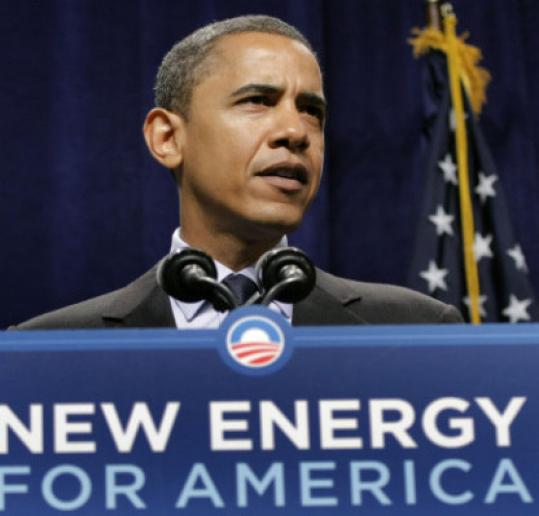
Today, President Barack Obama visited ZBB Energy Corporation in Menomonee Falls, Wisconsin, and declared that our commitment to clean energy is expected to lead to more than 800,000 jobs by 2012.ZBB Energy Corporation is a clean energy manufacturing company specializing in the production of advanced zinc bromide flow batteries and intelligent power control platforms for renewable energy storage. They are a prime example of how the Recovery Act is helping new clean energy industries bolster the manufacturing economies of mid-western states and lead us toward a brighter, greener economic future. Using funds from two of the Department of Energy’s Recovery Act projects, $1.3 million from the State Energy Program and a 48C Manufacturing Tax Credit worth $14.6 million, ZBB Energy has already been able to retain nearly a dozen workers, and over time, they expect to hire about 80 more.
To learn more about DOE Recovery Act investments in Wisconsin and/or your state visit energy.gov/recovery/states
Published on DOE Blog (http://blog.energy.gov)
Monday, July 12, 2010
China keeps promise to curb carbon emission
Although it is not an easy task, China strives to put into practice the promise made last November before the Copenhagen Conference -- to cut its carbon dioxide emissions per unit of gross domestic product by 40 to 45 percent by 2020 compared with the level from 2005."The old path of economic growth based on environmental pollution implemented in developed countries over the past 300 years is not feasible in China, and China can not afford the losses brought by this development mode," said China's Minister of Environmental Protection, Zhou Shengxian, at an ongoing theme forum of the Shanghai World Expo in Nanjing, capital of east China's Jiangsu Province. The two-day forum ended Sunday.
China should base its development on its own situation and explore a new development path that is more efficient and sustainable, costs less, and results in less carbon emissions, Zhou said.
After the outbreak of the international financial crisis in September 2008, the world economy suffered the greatest challenge since the Great Depression as the United Nations Environment Programme (UNEP) advocated the development of a "green economy" worldwide.
In China's 4-trillion-yuan (about US$588.24 billion) economic stimulus plan, funds for energy savings, carbon reductions and ecological construction reached 210 billion yuan. Plus the 370 billion yuan in funds used for innovation, restructuring and coping with climate change, "green investment" accounted for 14.5 percent of the stimulus plan. It indicates the government is shifting its values from traditional "profit maximization" to "welfare maximization."
Zhang Guobao, director of the National Energy Administration, said "the government puts great stock in seeking harmonious development between cities and the environment, and is readjusting the energy structure by giving priority to the development of clean and low-carbon energies, including hydroelectric, nuclear, wind and solar power."
Authorities have closed small, coal-fired plants totaling 60.06 million kilowatts in capacity between 2006 to 2009. This year's target of closing 10 million kilowatts of capacity should be achieved by August, he said.
"We have promised to the international community that 15 percent of our power will be generated from non-fossil sources by 2020," Zhang said. At present, non-fossil energy accounted for around 7.8 percent.
The country's operating hydropower capacity in 2009 reached 197 million kilowatts, the highest in the world. Further, the installed capacity of wind power has been doubling every year for the past four years to more than 22 million kilowatts, the third highest in the world, and the figure is expected to exceed 30 million kilowatts in 2010.
Zhang proposed increasing the proportion of clean energy in the total national energy consumption. Statistics show that China invested US$34.6 billion in clean energy in 2009, exceeding the United States which invested US$18.6 billion, to become the highest in the world. However, China's investment in clean energy was only US$ 2.5 billion five years ago.
China has reduced the traditional high-energy consumption industries while increasing its investment in clean energy. From 2006 to 2009, China shut down 6.06 million kilowatts of small coal fired power units, a figure equivalent to the fully installed capacity of Britain, therefore saving 64 million tonnes of coal and preventing 160 tonnes of carbon dioxide from being introduced into the air every year.
"China took only 30 years to have the environmental problems that had gradually emerged in developed countries over 200 to 300 years. As a big developing country with a population of 1.3 billion people, China is under unprecedented pressure for both economic development and environmental protection," said Minister Zhou Shengxian.
The Shanghai World Expo well illustrates China's effort to save energy and curb carbon dioxide emission. More than 80 percent of the pavilions adopted environmental friendly designs in buildings, while more than half of the pavilions use clean and renewable energy.
However, China's carbon emission reduction target cannot be achieved easily. Wang Ke, a team member of the energy and ecological economy project under the People's University in Beijing, said the shift to a low-carbon economy will only be met at a huge cost to society.
For instance, more than 400,000 people were laid off as a result of the shutdown of small coal-fired power plants from 2006 to 2009. Many studies indicate that curbing greenhouse gas emissions may delay China's development, affect people's income, lead to unemployment and further increase the burden on vulnerable groups in the short term.
Hu Angang, director of the Center for China Studies, a top think tank for policy-making under the Chinese Academy of Sciences and Tsinghua University, said China's promise of curbing carbon emissions and saving energy is not only a response to international pressure, but to meet the internal demands of the transformation of the economic development mode.
http://cdm.ccchina.gov.cn/
Saturday, July 10, 2010
Canada: funding for clean transportation projects
Calgary, Alberta – Eighteen clean technology projects will receive $40 million in funding from Sustainable Development Technology Canada (SDTC), including hybrid technologies for transportation. The funding is intended to help move innovative technology solutions to market."SDTC and the Government of Canada are providing industry the tools they need to become more productive, competitive and efficient," said Juergen Puetter, chairman of SDTC. "When these companies bring their technologies to businesses and consumers, they create jobs, provide Canada a technological edge and contribute to improving the quality of Canada's air, water and soil."
The new investments bring SDTC's total portfolio value to over $1.6 billion. The SDTC is an arm's-length foundation created by the government of Canada, and includes the $550 million SD Tech Fund for projects that address climate change, air quality, clean water and clean soil, and the $500 million NextGen Biofuels Fund, which supports the establishment of first-of-kind large demonstration-scale facilities for the production of next-generation renewable fuels.
The projects include an advanced battery system for plug-in hybrid electric vehicles (PHEV) by Electrovaya Corporation of Mississauga, Ontario, which will be tested in a fleet of Ram 1500 PHEV trucks; a hybrid auxiliary power unit for tractor-trailers by EnerMotion Inc. of Caledon, Ontario; and a cathode material for lithium-ion batteries by Phostech Lithium Inc. of Candiac, Quebec.
Http://www.sdtc.ca
Wednesday, July 07, 2010
Renewable sources accounted for 2/3 of new electricity generation capacity in Europe in 2009
A total of 27.5 GW of new power capacity was constructed in the EU in 2009. Out of this, 10.2 GW (38%) was wind power; 6.6 GW (24%) gas fired power stations; 5.8 GW (21%) PV; 2.4 GW (8.7%) coal fired power stations; 580 MW (2.1%) biomass, 570 MW (2.1%) oil; 440 MW (1.6%) waste, 440 MW (1.6%) nuclear, 390 MW (1.4%) hydro and 120 MW (0.4%) CSP.For the second year in a row, wind energy is the leading electricity generation technology in Europe and the renewable share of new power installations was 62% in 2009.
Renewable Energies are a very dynamic field with high growth rates and therefore it is of great importance to base decisions on the latest information available as otherwise important development trends might be missed. For certain renewable energy technologies the development of effective policy measures is not yet possible due to the lack of robust, consistent and up to date data.
These Renewable Energy Snapshots are based on various data providers including grey data sources and tries to give an overview about the latest developments and trends in the different technologies.
The Renewable Energy Snapshots monitor the development of renewable electricity generation, and whether the 2020 targets can be reached.
For electricity generation from Hydro Power (2009: 351 TWh), no major increase is expected as most large hydro resources are already in use today. In addition, it is not clear if the same resources will still be available on a continuous base in the future if extreme weather conditions become more frequent and additional water resource needs might arise. Small Hydro is an option, but was not investigated in this report. However, pumped Hydro will play an increasingly important role as storage capacity for the other Renewable Energy Resources.
Additional renewable electricity generation technologies include geothermal, tidal and wave power. These technologies are in a research and development phase and no major market penetration is happening yet. Therefore, they are not yet included in this Snapshots, but it is expected that their market introduction will take place within the next decade.
It is expected that if the current growth of electricity generation from biomass continues, bioelectricity generation could be around 200 TWh in 2020 up from 108 TWh in 2008. An uncertainty in this estimation is clearly the competitive use of biomass for other energy uses like heat and transport fuels. To what effect this will change the development of bioelectricity is not yet clear. Bioelectricity generation, especially via biogas or CHP has the big advantage that biomass is storable and the
electricity can be generated on demand. This variable dispatchability is extremely important for a renewable energy supply and increases the value significantly.
In Europe, installed capacity from Concentrated Solar Power is still small today (430 MW in May 2010), but is steadily accelerating. According to the European Solar Thermal Electricity Association (ESTELA) 30 GW of CSP capacity could be installed in Europe generating around 100 TWh of electricity in 2020.
In Europe Solar Photovoltaic Electricity Generation has again increased its cumulative installed capacity by more than 50% to 16 GW in 2009 and for 2010 installations of up to 10 GW are expected. This would result in a capacity almost 9 times as high as was foreseen in the White Paper as the Target for 2010. The European Photovoltaic Industry Association published their ambitious vision plan for
2020 last year. The new target calls for up to 12% of the European electricity generated with solar photovoltaic electricity generation, or 380 to 420 TWh. The necessary growth rate would be 36% annually, which is much lower than what the industry has seen in the last 8 years. From an industry point of view the target is ambitious, but achievable, however it will need accompanying measures to ensure that the electricity grid will be able to absorb and distribute the generated solar electricity. This is especially important, because 12% of total electricity from solar photovoltaics translates to a cumulative installed PV capacity of 350 GW or close to 60% of the current total European thermal electricity generation capacity (590 GW in 2008) or more than 40% of the current total European electricity generation capacity (800 GW in 2008). Therefore, efficient transmission and storage
systems, as well as modern supply and demand management, have to be available to fulfil this vision.
Wind energy is already the number one in newly installed capacities in Europe. With more than 74 GW of cumulative installed capacity in 2009, it exceeded the White Paper target of 40 GW by more than 80%. The new target of the European Wind Association is aiming at 230 GW installed capacity (40 GW offshore) in 2020 capable of providing about 20% of European electricity demand.
It can be concluded that if the current growth rates of the above-mentioned Renewable Electricity Generation Sources can be maintained, up to 1,600 TWh (45 – 50%) of renewable electricity could be generated in 2020. With this contribution the renewable electricity industry would significantly contribute to the fulfilment of the 2020 targets.
Last but not least it has to be pointed out that this significant contribution of the
renewable electricity sector will not come by itself. Without increased political support, especially in the field of fair grid access and regulatory measures to ensure that the current electricity system is transformed to be capable to absorb these amounts of Renewable Electricity, these predictions will not come about. In addition, the different renewable energy sources will need for the next decade substantial public R&D support as well as accompanying measures to enlarge the respective markets, as cost reduction and accelerated implementation will depend on the production volume and not on time!
Download "Renewable Energy Snapshots 2010" report: http://re.jrc.ec.europa.eu/refsys/pdf/Snapshots_EUR_2010i.pdf
Thursday, November 19, 2009
Smart Grid: Honeywell awarded grant to implement transition to reliable energy grid
Honeywell Will Also Help Other Grant Recipients Implement Programs as the Country Transitions to a More Efficient, Reliable Energy GridHoneywell (NYSE: HON) today announced it has been awarded an $11.4-million grant from the Department of Energy (DOE) as part of the largest single energy grid modernization investment in U.S. history. The grant, one of several awarded from a smart grid funding package under the American Recovery and Reinvestment Act (ARRA), solidifies Honeywell's position as a key player in helping the U.S. transition to a more efficient, reliable and secure electric system.
"Honeywell has long been supportive of investing in our country's energy independence and these grants are essential to that end," said Roger Fradin, president and chief executive officer of Honeywell Automation and Control Solutions. "However, the hard part comes next -- rebuilding the energy infrastructure. Honeywell has the project management experience to help utilities successfully deploy their programs and forge a tighter link with customers. And we have the technology to help homeowners and businesses take control of their energy use and maximize the benefits of a smart grid."
One of only four non-utility companies to receive funding, Honeywell will use the grant to support a critical peak pricing response program that will help commercial and industrial facilities in the Southern California Edison (SCE) service territory automatically implement energy management strategies to reduce costs and improve efficiency. The program will support nearly 700 customers as SCE and other California utilities move to critical peak pricing -- a program that offers rate discounts during the summer months to customers who can reduce or shift power during periods of peak electrical consumption.
The new rate structure will see prices spike during periods of peak demand, approximately 10 to 15 days per year. SCE will send a notice prior to any increase and Honeywell will install technology that allows customers to automate load-shedding strategies that reduce energy use during these periods. Based on open automated demand response (OpenADR) standards and powered by Tridium's Niagara(AX) Framework® and JACE® controller, the system will receive the utility's signal, communicate with the facility's building automation system and make changes based on parameters the customer sets. This could include turning off banks of lights, cycling equipment on and off, or temporarily increasing temperature set points in the facility.
In addition to installing the technology, Honeywell will provide customer outreach, education and engineering services, as well as ongoing support.
"Honeywell's program integrates business customers with a smarter grid," said Larry Oliva, director, Tariff Programs and Services, Southern California Edison. "Our customers will have the ability to decide how they want to respond to pricing changes, and the subsequent reduction in energy use will help us provide affordable, clean power over the long term."
Honeywell is also helping other organizations implement projects tied to the smart grid investment grants, including an advanced metering infrastructure (AMI) program for the city of Quincy, Fla. Honeywell will manage the installation of smart meters throughout the city and provide technology to automate commercial load-shedding strategies, similar to the SCE program.
Honeywell also won ARRA grants for the research and development of technology that ties into the smart grid. For example, the company is testing solutions that will significantly reduce down time and failures for the growing fleet of wind turbines in the United States. Researchers are also developing a controls infrastructure for optimizing renewable energy micro-grids.
The DOE funding, as well as Honeywell's involvement in other grants, reflects the company's expertise in smart grid services and technologies. Honeywell Utility Solutions, part of the Building Solutions business, has delivered demand response programs for almost 20 utilities in the United States and Canada. It specializes in all aspects of demand response from program design and load-control technology to customer recruitment and support.
www.honeywell.com/utility
Thursday, November 05, 2009
Industrial Energy Efficiency Projects Get Financing
Energy Secretary Steven Chu announced that the Department of Energy is awarding more than $155 million in funding under the American Recovery and Reinvestment Act for 41 industrial energy efficiency projects across the country. These awards include funding for industrial combined heat and power systems, district energy systems for industrial facilities, and grants to support technical and financial assistance to local industry. The industrial sector uses more than 30 percent of U.S. energy and is responsible for nearly 30 percent of U.S. carbon emissions.“To remain globally competitive, American industry needs to be energy efficient. The funding for industrial energy efficiency technologies announced today will support a robust American industrial sector and help to usher in a clean energy economy,” said Secretary Chu. “Many companies already realize that improving efficiency saves money while helping the environment. These projects will make energy efficiency technologies more widely available, cutting energy use and reducing carbon pollution across the country.”
Nine projects announced today will promote the use of combined heat and power, district energy systems, waste energy recovery systems, and energy efficiency initiatives in hospitals, utilities, and industrial sites. Combined Heat and Power and District Energy Systems generate both the heat and power needed for industrial processes on-site, instead of using electricity from the grid, and can be nearly twice as efficient as conventional heat and power production. These 9 awards – totaling approximately $150 million – will be leveraged with $634 million in private industry cost share for a total project value of up to $785 million. These industrial efficiency projects will result in almost 14 trillion Btu in estimated energy savings, which is equivalent to over 112 million gallons of gasoline per year.
The remaining 32 awards will provide local technical support for the industrial sector through university-based Industrial Assessment Centers, state agencies, regional partnerships, and a national technical assistance provider. This funding will enable DOE’s Industrial Technologies Program to provide technical and financial support for local businesses and manufacturing facilities to save energy and reduce their energy costs, obtain financing to realize significant gains in efficiency and productivity, and save and create manufacturing and industrial sector jobs across the country.
These 32 projects are an extension of DOE’s successful Save Energy Now initiative, which provides plant energy assessments and technical assistance to energy intensive industrial facilities. Since the program’s inception in 2006, more than 2,300 assessments have been completed. Over 1,500 industrial facilities implemented the identified energy measures, which have saved $218 million, 35 trillion Btu and 2.3 million metric tons of carbon dioxide each year.
The projects announced today are selections for financial award. The final details for each project award are subject to final contract negotiations between DOE and the grantee.
Today’s awards include:
Industrial Technologies ($149.3 million total)
* Texas Medical Center Central Heating and Cooling Services Company
* Seattle Steam Company
* Rhode Island LFG Genco, LLC
* Air Products and Chemicals, Inc.
* Ridgewood Renewable Power, LLC
* ArcelorMittal USA
* Verso Paper Corporation
* The Dow Chemical Company
* Clean Tech Partners
Industrial Assessment Centers ($1.87 million total)
* Bradley University
* Georgia Institute of Technology
* Lehigh University
* Mississippi State University
* North Carolina State University
* Oklahoma State University
* San Diego State
* Tennessee Technological University
* Texas A&M University
* University of Alabama
* University of Dayton
* University of Delaware
* University of Louisiana at Lafayette
* University of Michigan
* West Virginia University
State Agencies ($3.84 million total, approximately $350,000 awarded to each state)
* Alabama Department of Economic and Community Affairs
* Idaho Office of Energy Resources
* Kentucky Department for Energy Development and Independence
* Louisiana State Energy
* Maryland Energy Administration
* Minnesota Department of Commerce
* Mississippi Development Authority-Energy Division
* New Jersey Industrial Energy Program
* Ohio Energy Office, Ohio Department of Development
* Pennsylvania Department of Environmental Protection
* Wisconsin’s Office of Energy Independence
Regional Partnerships ($2.5 million total, $500,000 awarded per region)
* Energy Resources Division of the Georgia Environmental Facilities Authority along with Georgia, Tennessee, and North Carolina
* Massachusetts Department of Energy Resources and the Center for Energy Efficiency and Renewable Energy at the University of Massachusetts (CEERE)
* Illinois State Energy Office
* Washington Department of Community Trade and Economic Development
* West Virginia Department of Energy
National Technical Assistance Provider ($1.4 million)
* Oak Ridge Partnership for Industrial Energy Efficiency
http://www1.eere.energy.gov/industry/index.html
Wednesday, November 04, 2009
Hydropower Funding, Potential for 60.000 MW by 2025
"NHA applauds Secretary Steven Chu and Under Secretary Kristina Johnson on the commitment DOE is demonstrating to affordable, renewable energy and family-supporting job creation with today’s hydropower project funding announcement. Through public-private investments, DOE is helping to foster opportunities to develop the more than 60,000 megawatts of clean, domestic generating capacity and 700,000 jobs experts believe the U.S. hydropower industry can create by 2025.
"All of the hydropower projects Under Secretary Johnson announced for funding today during her appearance at NHA member Voith Hydro's manufacturing plant in York, Pennsylvania, involve enhancing existing facilities to make them more productive, while improving their environmental footprints. In a report NHA released last month, we identified opportunities to create nearly 9,000 megawatts of new capacity through similar upgrades by 2025.
“We also welcomed Under Secretary Johnson’s comments about DOE’s commitment to doubling hydropower resources, through efforts like this. NHA believes that initiatives like this will propel our industry toward President Obama's goal of building a clean-energy economy that includes hydropower.
"Just as our predecessors helped lift the country out of the Great Depression by creating jobs and building hydroelectric facilities to power new commerce, today's hydropower industry will serve our 21st-century demands for affordable, clean energy, strong environmental performance, and economic benefits from job creation and investment.
"NHA is pleased to congratulate both DOE and the seven hydropower projects for their commitment to this effort. As an industry, we stand ready to support this and other initiatives that will serve Americans now and for generations to come.”
http://www.hydro.org
Tuesday, October 27, 2009
Smart Grid: $3.4bn Investment Grants Awarded
President Obama Announces $3.4 Billion Investment to Spur Transition to Smart Energy GridThe $3.4 billion in grant awards are part of the American Reinvestment and Recovery Act, and will be matched by industry funding for a total public-private investment worth over $8 billion. Applicants state that the projects will create tens of thousands of jobs, and consumers in 49 states will benefit from these investments in a stronger, more reliable grid. Full listings of the grant awards by category and state are available HERE and HERE. A map of the awards is available HERE.
Monday, June 29, 2009
Obama Administration Launches New Energy Efficiency Efforts
Will save billions for consumers, business while helping to create new jobs and strengthen American competitivenessWASHINGTON - Building on the action by the U.S. House of Representatives in passing historic legislation that will pave the way for the transition to a clean energy economy, President Barack Obama and U.S. Energy Secretary Steven Chu today announced aggressive actions to promote energy efficiency and save American consumers billions of dollars per year. Today's announcement underscores how the clean energy revolution not only makes environmental sense, but it also makes economic sense - creating jobs and saving money.
"One of the fastest, easiest, and cheapest ways to make our economy stronger and cleaner is to make our economy more energy efficient," said President Obama. "That's why we made energy efficiency investments a focal point of the Recovery Act. And that's why today's announcements are so important. By bringing more energy efficient technologies to American homes and businesses, we won't just significantly reduce our energy demand; we'll put more money back in the pockets of hardworking Americans."
"When it comes to saving money and growing our economy, energy efficiency isn't just low hanging fruit; it's fruit lying on the ground," said Secretary Chu. "The most prosperous, competitive economies of the 21st century will be those that use energy efficiently. It's time for America to lead the way."
More Energy Efficient Lighting
Today's announcement includes major changes to energy conservation standards for numerous household and commercial lamps and lighting equipment. Seven percent of all energy consumed in the U.S. is for lighting.
The final rule has numerous benefits, including:
* Avoiding the emission of up to 594 million tons of CO2 from 2012 through 2042 - roughly equivalent to removing 166 million cars from the road for a year;
* Saving consumers $1 to $4 billion annually from 2012 through 2042;
* Saving enough electricity from 2012 through 2042 to power every home in the U.S. for up to 10 months;
* Eliminating the need for up to 7.3 gigawatts of new generating capacity by 2042 - equivalent to as many as 14 500MW coal-fired power plants;
* Decreasing the electricity used in GSFLs by 15%, saving consumers up to $8.66 per lamp over its lifetime; decreasing electricity used by IRLs by 25%, saving consumers $7.95 per lamp over its lifetime.
In February 2009, President Obama tasked the Department of Energy with quickening the pace of energy conservation standards for appliances, while continuing to meet legal and statutory deadlines. Today's announcement - which takes effect in 2012 - focuses on General Service Fluorescent Lamps (GSFL), which are commonly found in residential and commercial buildings, and Incandescent Reflector Lamps (IRL), which are commonly used in recessed and track lighting. These fluorescent and incandescent lamps represent approximately 38 and 7 percent of total lighting energy use respectively.
The final rule, as issued by the Secretary of Energy on June 26, 2009, can be viewed and downloaded from the Office Energy Efficiency and Renewable Energy's website.
Building Efficiency Initiative
President Obama and Secretary Chu today announced a $346 million investment from the American Recovery and Reinvestment Act to expand and accelerate the development, deployment, and use of energy efficient technologies in all major types of commercial buildings as well as new and existing homes.
Residential and commercial buildings consume 40 percent of the energy and represent 40 percent of the carbon emissions in the United States. Building efficiency represents one of the easiest, most immediate and most cost effective ways to reduce carbon emissions while creating new jobs. With the application of new and existing technologies, buildings can be made up to 80 percent more efficient or even become "net zero" energy buildings with the incorporation of on-site renewable generation.
Today's buildings consume more energy than any other sector of the U.S. economy, including transportation and industry. In addition, almost three-quarters of our nation's 81 million buildings were built before 1979. Some were designed and constructed for limited service, and many will eventually require either significant retrofits or replacement.
Innovations in energy-efficient building envelopes, equipment, lighting, daylighting, and windows, in conjunction with advances in passive solar, photovoltaic, fuel cells, advanced sensors and controls and combined heating, cooling, and power, have the potential to dramatically transform today's buildings. These technologies-coupled with a whole building design approach that optimizes the interactions among building systems and components-will enable tomorrow's buildings to use considerably less energy, while also helping to reduce emissions and increase energy security.
This funding includes:
Advanced Building Systems Research ($100 million)
These projects will address research focused on the systems design, integration, and control of both new and existing buildings. Buildings need to be designed, built, operated, and maintained as an integrated system in order to achieve the potential of energy efficient and eventually net zero-energy buildings. These projects will move beyond component-only driven research and address the interactions in buildings as a whole, in order to progress development of integrated, high performance buildings and achieve net zero- energy buildings.
Residential Buildings Development and Deployment ($70 million)
Expanded work in Residential Buildings will increase homeowner energy savings by supporting energy efficient retrofits and new homes while raising consumer awareness of the benefits of increased health, safety, and durability of energy efficiency. The projects will provide technical support to train workers and create jobs, developing a new workforce equipped to improve the Nation's homes and will permit a major initiative to provide builders with technical assistance and training through states, utilities, and existing programs to increase the market share of new homes achieving substantial whole house energy savings. To address existing homes, DOE will work with municipalities with a variety of housing types and vintages as well as subdivisions with similar housing stock to encourage a large number of energy efficiency retrofits.
Commercial Buildings Initiative ($53.5 million)
These Recovery Act funds will be used to accelerate and expand partnerships with major companies that design, build, own, manage, or operate large fleets of buildings and that commit to achieving exemplary energy performance. This funding will be used to expand the number of these partnerships from 23 to about 75 through a competitive process beginning in September, 2009.
Buildings and Appliance Market Transformation ($72.5 million)
In order to achieve energy savings, and ultimately lead to zero energy buildings, the marketplace must be conditioned to accept the necessary advanced technologies and activities and ensure that the current technologies are performing as intended via current energy efficiency standards. Key activities include expanding ENERGY STAR to accelerate development of energy efficient products and expand the ENERGY STAR brand into new areas; preparing the design, construction, and enforcement community to implement commercial building energy codes that require a 30 percent improvement in energy efficiency over the 2004 code in 2010; and accelerating and expanding DOE's Appliance Standards program to evaluate innovative technologies and develop new test procedures that are more representative of today's energy use and equipment.
Solid State Lighting Research and Development ($50 million)
The objective of the solid state lighting activities is to advance state-of-the-art solid-state lighting (SSL) technology and to move those advancements more rapidly to market through a coordinated development of advanced manufacturing techniques. This project will both aid in the development and reduce the first cost of high performance lighting products. Continuing advances can accelerate progress towards creating a U.S.-led market for high efficiency light sources that save more energy, reduce costs, and have less environmental impact than other conventional light sources.

Friday, December 05, 2008
Too Big To Fail? Too Big, Period.
The executives of General Motors, Ford and Chrysler made yet another trek to Washington DC this week - this time ditching the corporate jets to drive hybrid cars - and once again pled for a federal bailout to prop up their struggling companies. Up to $34 billion taxpayer dollars are apparently all that stands between at least two of the "Big Three" automakers and bankruptcy.
GM's executives told Congress the company will fail very, very soon unless it receives at least $12 billion in loans in the coming months. Chrysler warned they could go belly up by year's end without $7 billion in government aid. Even Ford, which is doing a bit better than its two Detroit brethren, is asking for an open, taxpayer-funded line of credit of up to $9 billion dollars.
All this means its time for Congress and the American public to face two basic facts.
First, GM and Chrysler are essentially bankrupt already, and Ford may not be far behind. The insular management of the Big Three has already run their companies into the ground, and if a massive government loan is the only thing that will keep them afloat, we might as well consider them failed companies, for all intents and purposes. So let's start treating them that way. With the economy in recession already, we certainly need to ensure a soft landing - rather than a hard collapse - for the auto companies and the millions of Americans who depend on them for their paychecks. But the objective of the bailout should be to preserve American auto industry jobs, not to preserve the Big Three companies themselves. GM, Chrysler, and perhaps even Ford are done. We shouldn't be afraid to turn the page on this chapter of the American auto industry and usher in something entirely new - and better.
Second, if GM, Chrysler and Ford are too big to fail, then it's time to realize that they are simply too big, period. If taxpayers are going to put their money on the line to bailout Detroit, we should be taking advantage of this opportunity to make fundamental changes to the American auto industry. It is time to say, "Never again!" to auto companies that are so large that they can hold taxpayer's hostage because the consequence of their failure is too great - companies that are so large that competition and innovation are stifled by their vast and unwieldy bulk.
Here's what we propose: offer government loans to the Big Three to ensure the companies don't collapse now during the midst of recession. But the conditions of those loans should be similar to the conditions of the Chapter 11 bankruptcy the companies would enter in absence of the loans. No blank checks for the Big Three to continue business as usual.
Instead, Congress will appoint an independent blue ribbon commission. They'll staff that commission with the best bankruptcy judges, restructuring consultants, and industry experts in the world. This commission will be charged with breaking the company up into several smaller companies that will inherit the different divisions, car models and assets of the parent. The commission will then seek new management to run each new company, deploying head hunters to recruit top talent from mid-level management within the Big Three, or even in the ranks of foreign companies like Toyota, Volkswagen or Hyundai.
The new companies - Baby GMs, or Baby Chryslers - will then be turned back over to the private sector and they'll be encouraged to issue new common stock to raise more operating capital. The government will have to vigorously enforce anti-trust laws to ensure these companies remain small, at least for the time being, and to keep foreign automakers or governments from gobbling them up (the Chinese government has already been shopping for one of the Big Three, and would gladly snatch up the new companies if we let them).
In the end, we'll have a new kind of American auto company - leaner and nimbler, and under a new class of managers - and a new kind of America auto industry - one that's more competitive and fosters the continual innovation that's been absent in Detroit for too long.
In the short run, we'll protect as many automaker jobs as possible by injecting capital into these new companies to help them weather the transition period. In the long run, some of these new companies will fail, but when they do, they won't be large enough to send the entire economy into tailspin. And for every company that fails, others will succeed by adopting a corporate culture that embraces innovation and produces high-quality cars that match the American consumer's demands.
The net result will be a vibrant and innovative American auto industry that sustains good manufacturing jobs here in the United States. The new competitive environment will foster the adoption of more efficient vehicle designs, encourage the development of cutting-edge technologies like plug-in hybrid electric vehicles, and create space for up-and-comers like Silicon Valley-based electric car manufacturer Tesla Motors to enter the field.
That's the future of the American auto industry. Anything short of this kind of dramatic restructuring of the industry will merely prolong the inevitable day when GM, Chrysler and Ford fall under their own weight, taking American jobs, taxpayer dollars and our economy with them. Too big to fail? Too big, period.
[Image source: FoxNews.com]
Wednesday, November 19, 2008
Good Corporate Citizens: Five Major US Companies Call for Climate, Clean Energy Solutions
Cross-posted from WattHead - Energy News and Commentary...
Today, five leading US companies joined Ceres investment group to launch a new coalition of corporate citizens calling on Congress to quickly enact strong U.S. climate and energy legislation that will spark a new clean energy economy and reduce global warming pollution. The new coalition issued several key principles for climate policy today, including proposals to stimulate renewable energy, promote energy efficiency and green jobs, cap global warming pollution and auction 100% of pollution allowances, and limit new coal-fired power plants to those that capture and store carbon emissions.
The group, which includes Nike, Starbucks, Levi Strauss, Sun Microsystems and Timberland, calls themselves Business for Innovative Climate and Energy Policy, or BICEP for short, and aims to flex some lobbying muscle to support climate and clean energy action.
The coalition’s goal is to work directly with key allies in the business community and members of Congress to pass meaningful energy and climate change legislation consistent with the following eight core principles:
Recognizing that climate change will ripple across all sectors of the economy BICEP members aim to offer new business perspectives on climate solutions to balance the sometimes narrow viewpoints offered by some of the more engaged members of the business community.
BICEP members also apparently recognize that being a good corporate citizen requires more than just purchasing carbon offsets and building more sustainable products. Like individual citizens, a real commitment to a new energy future requires more than personal actions, it requires active participation in the political process.
“We can voluntarily change our own behavior in the hopes of mitigating impacts and are doing so," said Hilary Krane, senior vice president of corporate affairs at Levi Strauss & Co., "but we also believe that U.S. government leadership is essential if we are to create an environment in which every U.S. company recognizes the role it must play in addressing climate change."
"Nike understands the value of investing in innovative solutions to address the challenges of sustainability," added Sarah Severn a corporate responsibility director with the company, "so we are proud to be part of a coalition of companies that believes legislative action on climate change and clean energy is not only urgent but imperative to creating positive, long-term change."
As a native Oregonian, I can't help but contrast Beaverton, OR-based Nike's active commitment to good corporate citizenship with Oregon's other major employer: Intel.
Intel is a key member of the Industrial Customers of Northwest Utilities group, a state lobbying organization that represents large electricity and natural gas users in Oregon and Washington. ICNU has consistently been on the wrong side of good energy policy - from the Oregon Renewable Energy Act of 2007 to the state's efforts to lead on climate policy - and is now forming a front-group called something like Oregon Industries for Balanced Climate Policy, gearing up to block progressive legislation in the 2009 Oregon legislature.
Unlike Nike, who puts it's lobbying muscle behind it's clean energy commitments, Intel tacitly and at times actively supports ICNU's efforts to stand in the way of Oregon's transformation into a clean energy leader. Intel should take queues from fellow Oregonians, Nike, and their semiconductor competitors at Sun about what good corporate citizenship means, and actively distance itself from ICNU's dirty deeds.
Until then, bravo to Nike and the BICEP members for leading the way.
Tuesday, November 18, 2008
Barack Obama Commits to "New Chapter" on Climate Change
In a prepared video address delivered today at the Global Climate Summit in Los Angeles, CA, President-elect Barack Obama pledged to turn over "a new chapter in America's leadership on climate change."
In the short address, viewed by an audience that includes leaders from around the nation and the world, Obama emphasized the importance of the upcoming international climate negotiations in Poznan, Poland, and said he was "looking forward to working with all nations to meet [the climate] challenge in the coming years."
Obama reconfirmed his campaign commitments to reduce greenhouse gas emissions 80% by 2050 through a national cap and trade program and again pledged to "invest $15 billion each year to catalyze private sector efforts to build a clean energy future."
Convened by California Governor Arnold Schwarzenegger and other US governors on the forefront of global warming solutions, the Bi-partisan Governors Global Climate Summit convenes in Los Angeles today and begins two days of dialog designed to spur global cooperation on climate change in advance of the UN-sponsored talks in Poland next month. To this crowd of climate leaders, Obama said:
"Few challenges facing America -- and the world -- are more urgent than combating climate change. Many of you are working to confront this challenge....but too often, Washington has failed to show the same kind of leadership. That will change when I take office."Watch the short video address below (full transcript below the fold):
Remarks as Delivered:
Let me begin by thanking the bipartisan group of U.S. governors who convened this meeting.
Few challenges facing America – and the world – are more urgent than combating climate change. The science is beyond dispute and the facts are clear. Sea levels are rising. Coastlines are shrinking. We've seen record drought, spreading famine, and storms that are growing stronger with each passing hurricane season.
Climate change and our dependence on foreign oil, if left unaddressed, will continue to weaken our economy and threaten our national security.
I know many of you are working to confront this challenge. In particular, I want to commend Governor Sebelius, Governor Doyle, Governor Crist, Governor Blagojevich and your host, Governor Schwarzenegger –all of you have shown true leadership in the fight to combat global warming. And we've also seen a number of businesses doing their part by investing in clean energy technologies.
But too often, Washington has failed to show the same kind of leadership. That will change when I take office. My presidency will mark a new chapter in America's leadership on climate change that will strengthen our security and create millions of new jobs in the process.
That will start with a federal cap and trade system. We will establish strong annual targets that set us on a course to reduce emissions to their 1990 levels by 2020 and reduce them an additional 80% by 2050.
Further, we will invest $15 billion each year to catalyze private sector efforts to build a clean energy future. We will invest in solar power, wind power, and next generation biofuels. We will tap nuclear power, while making sure it's safe. And we will develop clean coal technologies.
This investment will not only help us reduce our dependence on foreign oil, making the United States more secure. And it will not only help us bring about a clean energy future, saving our planet. It will also help us transform our industries and steer our country out of this economic crisis by generating five million new green jobs that pay well and can't be outsourced.
But the truth is, the United States cannot meet this challenge alone. Solving this problem will require all of us working together. I understand that your meeting is being attended by government officials from over a dozen countries, including the UK, Canada and Mexico, Brazil and Chile, Poland and Australia, India and Indonesia. And I look forward to working with all nations to meet this challenge in the coming years.
Let me also say a special word to the delegates from around the world who will gather at Poland next month: your work is vital to the planet. While I won't be President at the time of your meeting and while the United States has only one President at a time, I've asked Members of Congress who are attending the conference as observers to report back to me on what they learn there.
And once I take office, you can be sure that the United States will once again engage vigorously in these negotiations, and help lead the world toward a new era of global cooperation on climate change.
Now is the time to confront this challenge once and for all. Delay is no longer an option. Denial is no longer an acceptable response. The stakes are too high. The consequences, too serious.
Stopping climate change won't be easy. It won't happen overnight. But I promise you this: When I am President, any governor who's willing to promote clean energy will have a partner in the White House. Any company that's willing to invest in clean energy will have an ally in Washington. And any nation that's willing to join the cause of combating climate change will have an ally in the United States of America. Thank you.
##
Thursday, November 13, 2008
Huge Legal Ruling Blocks All US Coal Development
BREAKING NEWS: The Sierra Club just won a HUGE legal victory in a coal permitting case at the Environmental Protection Agency's Environmental Appeals Board.
The ruling in the Bonanza coal plant permitting case (pdf) ruled with the Club's lawyers that since the Mass. v EPA Supreme Court ruling said Carbon Dioxide is a pollutant under the Clean Air Act, new coal-fired power plants must implement "Best Available Control Technology" (BACT for short) for CO2.
While the Sierra Club's legal team and other lawyers are still determining the full implications of the decision, it appears that this decision will essentially stop all new coal plant permitting dead in it's tracks for at least a year as EPA decides what BACT means in the context of CO2.
The BACT provision of the Clean Air Act requires that new power plants must employ the most effective, readily available pollution control technologies for regulated pollutants in order to receive air quality permits required for development, ensuring that new power plants are progressively cleaner as new technologies become readily available. Until this ruling, BACT has only applied to NOx, acid rain-forming SO2, particulate matter, mercury and other noxious pollutants, but not carbon dioxide, which spewed freely from permitted power plants.
What BACT means for CO2 is therefore undefined, and the process of defining it will take time - time during which no new coal plants can receive permits. BACT for CO2 is unlikely to mean carbon capture and storage (yet), since it's not readily available, but it will probably mean some combination of co-generation (making use of waste heat from electricity generation), efficiency improvements, and/or fuel switching/co-firing with biomass. Ultimately, President-elect Obama's EPA gets to decide how BACT is defined for CO2, a process which will take at least a year.
In the meantime, 30 permits for new coal-fired power plants in the seven state directly regulated by the EPA's permitting process, plus projects on all Indian Reservations will immediately die because of this ruling. Other states that do their own permitting under devolution of authority from EPA will have to start their permitting processes over from scratch. They can either decide on a case by case basis what BACT means for CO2, or they can wait for EPA to rule on nationwide basis. The Environmental Appeals Board ruling says that decision is best made on a national basis.
In short, with this new regulatory uncertainty, it's highly unlikely anyone will want to invest a dime in a new coal plant for the foreseeable future.
Of course, this will also leave President Obama with an interesting ruling to make with some real political ramifications. But I'd say Obama has plenty of cover since the coal industry has been so avidly touting how clean it is these days. The real bold move would be to require all new coal plants to meet an emissions performance standard that essentially means they'd have to sequester at least half their emissions (as in CA or WA state's emissions performance standards), put an end to mountain top removal coal mining, and really tell the coal industry, "it's time to put up or shut up" and make this "clean coal" thing they keep talking about a reality.
The Club will have a press release out later today, and I'd refer you to the Warming Law blog for more detailed legal analysis no doubt coming soon. This was an unexpected ruling, so they're still sorting out all the ramifications.
Friday, November 07, 2008
Post-election Poll Confirms Bipartisan Support for Barack Obama's Clean Energy Plans
Cross-posted from the Breakthrough Institute and WattHead - Energy News and CommentaryThis week, we've been writing about President-elect Barack Obama's powerful mandate to build a new, clean energy economy and revitalize our nation's ailing economy. A new post-election poll from Zogby Interactive confirms that Americans overwhelmingly view new investments in clean energy as critical to revitalizing America's ailing economy.
The poll found that more than three out of four voters - 78% - support clean energy investments to revitalize the economy, with 50% saying they strongly agree that clean energy investment is vital to the nation's economic future.
Clean energy investments enjoy broad, bipartisan support as well, the poll found. According to Zogby:
"While the vast majority of Democrats (96%) and independent voters (77%) view clean energy investment as a key means to boost the U.S. economy, more than half of Republican voters (58%) also said the same."
Support for clean energy investments is strongest among young voters, African Americans and latinos, three demographics that were critical to Obama's landslide electoral success. Zogby found that:
"Support for clean energy investment is particularly strong among younger voters - 87% of those age 18-24 and 80% of those age 18-29 believe this type of investment is necessary to help improve the U.S. economy. African American voters (94%) and Hispanic voters (84%) also showed overwhelming support for clean energy investment."
"While the economy was the top issue in the 2008 election, clean energy clearly emerged as part of voter expectations for getting the economy back on track," said John Zogby, President and CEO of Zogby International. "Support for action on global warming, already strong in the 2006 election, was even stronger in 2008, particularly among young voters that are the future electorate."
The Zogby Interactive survey of 3,357 voters nationwide was conducted Nov. 5-6, 2008, and carries a margin of error of +/- 1.7 percentage points. The survey was commissioned by the National Wildlife Federation.
President-elect Barack Obama's New Energy Mandate, Part 2
Cross-posted from the Breakthrough Institute and WattHead - Energy News and Commentary
This is the second post in a continuing series delving into Barack Obama's opportunity to capture this political moment and provide a direction for energy policy and economic growth in the 21st century. Part 1 is here.
As Barack Obama assumes the mantle of President-elect of the United States of America, we are witnessing an historic realignment of the American political landscape. With the election of our nation's first African-American president, record voter turnout, and a dramatically redrawn electoral map, it seems that anything is possible now.
However, while Obama clearly has a new mandate to lead our nation, electoral mandates are fickle and even this one could fade in time. President-elect Obama has just 76 days to prepare for his inauguration. Then the real work of governing will begin, and what Obama decides to do in his first 100 days will either cement or erase the wave of popular support the President-elect rides today.
His job won't be easy. On January 20th, President-elect Obama will inherit the White House along with a plethora of pressing challenges all competing for his attention. There will be no time for baby steps, and President Obama must show bold and effective leadership right out of the gate. Furthermore, while the economic crisis will remain his top concern in the short-run, Obama cannot afford to ignore longer-term challenges and must develop synergistic solutions that can tackle multiple problems at once.
Thankfully, Barack Obama has stated that building a new energy economy will be his top priority upon assuming office. If he fully integrates this effort with his shorter-term economic stimulus plans, Obama could effectively tackle several priorities - economy recovery, energy security, and global warming - simultaneously. And getting this job done right could cement Obama's electoral mandate and pave the way for a truly transcendent presidency.
With the all the frantic focus on economic stimulus these days, it's easy to forget that Obama really faces two economic challenges. Yes, we need quick, effective, short term stimulus to pull our nation out of recession. But we also face a longer run economic revitalization challenge that is critical to ensuring our nation's prolonged prosperity.
For too long, we have neglected to invest in our nation. We've let or infrastructure crumble, our schools and universities want for funding, and we've neglected the once-solid pipelines of technological innovation that made us the envy of the world. Blinded by an era of cheap credit and unrestrained consumer spending and bound by a dominant and dogmatic market fundamentalist philosophy of governance, we've seen the light go out of our once vibrant economy. Rekindling the flame of American prosperity will no doubt be the defining task of the Obama administration.
Obama has already made it clear that he believes a new energy economy will be America's next engine of growth. That's smart. There are few (if any) other major growth sectors waiting to be spurred, and building a new energy economy knits together his central economic challenges with other national priorities. And if Obama makes the right decisions in the coming months, his short-term stimulus agenda can be an effective bridge to the longer-term investments necessary to build a new energy economy and secure prolonged American prosperity.
To get it right there a few things President-elect Obama should avoid doing:
- DON'T be afraid of deficit spending. Obama should ignore the counsel he will no doubt receive from deficit hawks and Clinton-era small-government Democrats to avoid deficit spending and stick to pay-go. And he should not listen if Greens council him to use a full-on cap and trade program to fund all of the spending for his new energy economy agenda. As the spender and lender of last resort during times of economic crisis, reining in government spending would be just as bad for the economy as raising taxes.
The fact is, deficit spending is necessary for effective stimulus and it's smart for longer-term investments that will net returns for the U.S. Treasury. And with so much demand for U.S. Treasury Bonds, yields on two-year bonds are just 1.3%. After factoring in inflation, that means the government can borrow money essentially for free. All this means that President Obama shouldn't be afraid to borrow and invest if it helps get our nation out of today's recession and lay the groundwork for a new energy economy. - DON'T focus on short-term stimulus only. That being said, Obama also cannot afford a myopic focus on stimulus alone or rely solely (or even at all) on cash rebate checks.
While quick-acting, cash rebate checks are not a particularly effective form of stimulus. In fact, initial studies find considerable evidence that most of the 2008 stimulus checks were put into savings or used to pay down debt. Furthermore, when they do work, rebate checks significantly under-perform investments in infrastructure and direct aid to state governments.
Perhaps most importantly, if Obama relies on rebate checks to stimulate the economy, he will miss the golden opportunity to make his stimulus investments a bridge to longer-term priorities, like sparking a new energy economy. Given the many challenges he faces as president, Obama cannot afford to miss that opportunity. - DON'T propose policies that raise energy bills. While a carbon price would be an important accelerator of clean energy investment and innovation, offering policies that raise energy prices at a time of economic insecurity is a risky political venture (to say the least). Instead, Obama should make the development of clean, affordable energy sources the explicit focus of his policies. To the degree that carbon pricing plays a role in his new energy agenda, President Obama must be clear that the revenue raised will be directly invested in programs that reduce the cost of clean energy alternatives and in energy efficiency programs that will slash the energy bills of households and businesses.
- DON'T promise short-term fixes to high gas prices. There simply aren't any, and Obama would be smart to use his new bully pulpit and impressive communication skills to make that fact clear to the American public.
The false promise of "Drill Baby, Drill!" is a disingenuous myth that President Obama should put to rest for good. Oil prices are set in a global commodity market, and the United States simply lacks sizable enough domestic production capacity to have a significant moderating effect on oil prices. If we want to moderate oil prices, we can't do it with a focus on the supply side of the equation, a fact Obama has correctly emphasized by repeatedly saying, "We can't drill our way out of our energy crisis."
If we want to expand domestic oil production, it shouldn't be motivated by false promises of lower gas prices. To the extent that we do expand drilling operations, it should be to raise revenues for public investment in a new energy economy, or to (modestly) enhance our trade deficit.
Obama also should make good on his promise to speak openly and honestly to the American people about the challenges we face: the American public needs to hear their President say that while gas and oil prices are low today, they will not remain so for long. According to the International Energy Agency, oil prices will rebound to well above $100 per barrel as soon as the global economy recovers, adding dead-weight just as our economy struggles to stand again. That means that today's temporary relief from $4.00/gallon gas is exactly the time to invest in new, affordable alternatives and efforts to sever our dependence on oil. If he's clear and honest about the challenge of oil dependency, Obama will have further reason to invest in a new energy economy and launch the critical, long-term effort to electrify transportation and create the clean, cheap energy sources we need. If implemented, this strategy will finally free our nation from the volatility of oil prices and the havoc gas price spikes wreck on our economy. - DON'T: separate out his clean energy and economic agendas. For too long, clean energy policy was the domain of a relatively isolated environmentalist agenda. Despite it's widespread impacts on issues of national security, economic prosperity and public health, clean energy failed to take it's rightful place as a core progressive issue.
Now, Obama has successfully transformed clean energy into a bread and butter economic issue. During the closing weeks of the campaign, Obama's clean energy agenda became fully intertwined with his economic recovery plans, and that's exactly where it should stay. A clean energy program will be most effective when fully integrated with the President-elect's economic recovery plans and it should remain a core component of his vision for renewed, long-term prosperity. Clean energy is an economic not environmental issue now, and that's exactly right.
President-elect Barack Obama's New Energy Mandate, Part 1
Cross-posted from the Breakthrough Blog and WattHead - Energy News and Commentary
Energy policy has never featured more prominently in a presidential election. Both candidates leaned strongly on their energy agendas during the campaign, frequently highlighting their plans to increase America's energy security, reduce energy prices and create jobs.
But while both candidates agreed that energy was a high priority and rhetorically supported an "all of the above" approach to new energy sources, the two candidates proposals actually differed sharply.
Furthermore, Barack Obama enjoyed the most success when his energy proposals were linked to his plans for economic recovery and couched in the rhetoric of job creation. That makes Obama's historic victory a clear endorsement of the President-elect's plans to invest in a new energy economy and argues for further integration of his energy plans into his economic recovery agenda.
While he claimed to support an "all of the above" energy plan, John McCain's energy platform revolved around increasing domestic production of oil and nuclear power.
McCain repeatedly touted nuclear power as his favorite (if not only) answer to our nation's energy challenge, and "Drill Baby, Drill!" practically became the all-encompassing mantra of the Republican party and it's presidential nominee.
McCain's repeated absence from key clean energy votes in the Senate and the selection of Sarah Palin as his running mate and supposed energy czar was the final proof that a McCain-Palin administration would focus centrally on expanding the old energy sources of the 19th and 20th century - oil and nuclear power - rather than the new energy sources of the future.
In contrast, while Barack Obama eventually embraced expanded drilling, he truthfully told the American people that "we can't drill our way out of our energy crisis." Similarly, he voiced conditional support for nuclear power, but made it clear that unresolved issues with nuclear waste and security needed to be addressed before nukes could play a central role in America's energy future.
Instead, Obama called for the creation of a comprehensive new energy economy, with a central focus on increasing vehicle fuel efficiency, electrifying transportation, expanding renewable energy production and retrofitting millions of homes and businesses to be more energy efficient. He considers this effort a new "national project" and promised to fund it to the tune of at least $150 billion over ten years.
Interestingly, Obama didn't really find his voice on energy policy until the economic crisis hit, unseating energy as the top campaign issue.
Back in September, when energy prices were the top election issue and Americans were shouting for quick fixes, Obama fumbled for an adequate response. In many ways, this was understandable, since there really are no quick fixes for high gas prices (that is, unless you consider the Bush energy plan - crashing the global economy! - to be a viable solution).
So while Obama had long-ago outlined a detailed and comprehensive energy plan that would spur the creation of clean and affordable new sources of energy in the long-term, he must have felt that telling the American people there was no short-term answer was a dangerous move. It certainly wasn't what Americans wanted to hear, but by remaining largely silent, Obama quickly found himself in the darkest days of the campaign.
Republicans had no qualms about proposing disingenuous solutions to spiking prices at the pump and quickly rallied around "Drill, Baby Drill!" It worked. McCain surged, taking the lead in the polls, and for the first half of September, it looked like Obama was headed towards defeat.
Then the economic crisis hit in all it's fury, and everything changed. The threat of global recession caused oil prices to fall almost as quickly as the Dow, and fears of another Great Depression displaced nearly every other concern.
That's when Obama realized that he was holding an ace up his sleeve: his energy plan.
In the closing weeks of the campaign, Obama hit his stride and brought his energy plan front and center. He touted opportunities to strengthen the American auto industry, bring manufacturing jobs back to American towns and save energy and money while creating new jobs in the energy efficiency sector. And in speech after speech, whenever he mentioned economic recovery and job creation, he talked about investments in clean energy and energy efficiency.
As he outlined his economic recovery plan on October 13th, Obama reiterated his pledge to "create 5 million new, high-wage jobs by investing in ... renewable sources of energy." He included funding for "energy efficient school and infrastructure repairs" in his Jobs and Growth Fund proposal and called on Congress to fast track "$50 billion in loan guarantees to help the auto industry retool, develop new battery technologies and produce the next generation of fuel efficient cars here in America."
In an October 22nd interview with Time magazine's Joe Klien, Obama clearly stated, "[Building a new energy economy] is going to be my No. 1 priority when I get into office," saying, "there is no better potential driver that pervades all aspects of our economy than a new energy economy."
A week later, Obama aired his thirty-minute October 29th TV special, "American Voices, American Stories." In it, he highlighted Seattle-based energy efficiency specialists, McKinstry Company as "a model for the nation," and again pledged to "invest $15 billion a year in energy efficiency and renewable sources of energy, like wind, solar, and biofuels, creating five million clean energy jobs over the next decade -- jobs that pay well and can never be outsourced."
In versions of his "closing argument" speech delivered across swing states in the final week of the election, Obama called for the creation of "an economy that rewards work and creates prosperity from the bottom up," exhorting America to "invest in... renewable energy for our future."
Finally, in his victory speech last night, he reiterated this theme, saying, "There is new energy to harness and new jobs to be created!"
History will record energy and the economy as the top issues of the 2008 presidential campaign. In the face of the mounting financial crisis, Barack Obama's calm assurance was the leadership the electorate was looking for. And as he successfuly united his clean energy and economic recovery proposals, Obama provided the vision of renewed prosperity Americans were hungry for.
Obama's landslide victory carries with it a clear mandate to build the new energy economy he so frequently spoke of. But he should be clear-eyed that this mandate derives from the economic crisis and continue to pursue his energy agenda hand-in-hand with his economic recovery plans.
With so many pressing concerns facing our nation, there will be little time for Obama to tackle issues one at a time. Instead, our nation's 44th President must find innovative and synergistic solutions that can address several priorities at once. We will see his abilities quickly tested. Even before Inauguration Day, Obama will be counted on to offer an economic stimulus agenda, and he'll be expected to act upon his self-selected No. 1 priority, - building a new energy economy - immediately upon assuming office. In fact, the fate of the Obama presidency may very well hang on his performance on this critical first test.
In Part 2 of this series, we will focus on how President-elect Barack Obama can get the job done right and advance an integrated clean energy and economic recovery agenda in his first 100 Days in office.
Wednesday, November 05, 2008
Waxman Challenges Dingell for Leadership of Influental House Committee
Representative Henry Waxman (D-CA) plans to challenge venerable Representative John Dingell (D-MI) for chairmanship of the influential House Energy and Commerce Committee, according to a report from Roll Call.
"The move marks a major showdown between two Democratic powerhouses, with implications for a host of major legislation next year from health care to global warming to renewable energy. Waxman currently chairs the Oversight and Government Reform panel."
The House Energy and Commerce Committee has jurisdiction over a wide range of critical issues, including energy policy, health care, interstate commerce issues and most likely global warming policy as well. The committee will no doubt be a critical player in the legislative implementation of President-elect Obama's policy agenda.
Waxman and Dingell have taken two dramatically different stances on global warming and energy during the 110th Congress and a change in chairmanship could reshape the Congressional political landscape on these issues.
Reflecting their differing constituencies, Dingell opposed California (and 15 other states') efforts to set tailpipe emissions standards for greenhouse gases while Waxman led hearings to press EPA Administrator Stephen Johnson on why the agency had blocked California's efforts.
The difference is just as clear when it comes to federal climate policy. In March 2007, Waxman introduced the Safe Climate Act, still the most aggressive proposal for global warming pollution caps in the Congress. In contrast, Dingell and his committee waited until the final hours of the 110th Congress to release a draft outline for economy-wide greenhouse gas regulations.
Roll Call reports that a number of other key House leadership races were also underway, less than 24 hours after the polls closed.
A hat tip to Brad Johnson at the Wonk Room on this one
Saturday, November 01, 2008
Renewable energy on the EU Agenda
The measure was proposed by the European Commission and is seen by entities as a «determining factor» in the sense that it may improve the growth of new technologies which may distinguish themselves by producing low carbon emissions and help increasing the scale of the clean energy tech market.
The main EU research institutes will be responsible for the alliance, which is based on the idea of «amplifying and improving the means» dedicated to the investigation of the energetic sector.
The creation of cooperative programs at state and EU level will serve as a starting point for fulfilling the «triple challenge of: energetic safety, climatic change and competitiveness, which the EU is facing today»
This alliance was created on the framework of the Set-Plan, a model intended to promote the development of renewable energy and reduce, on the long-term, the EU dependence on fossil fuel imports.
CO2 storage, bio, solar and wind energy, sustainable fusion and intelligent electric supply are amongst the processes intended to be improved through the creation of this plan.
Source: IOL PortugalDiƔrio
More info:
EU Innovation and technological development in energy
Thursday, October 30, 2008
Oregon Governor Ted Kulongoski Unveils Clean Energy Agenda for 2009
Oregon Governor Ted Kulongoski unveiled the ambitious clean energy agenda he hopes to see implemented by the 2009 Oregon Legislature on Monday. Following up on a landmark 2007 legislative session that saw the Beaver State enact an ambitious renewable energy standard, expand tax credits for clean energy, and enact new standards for energy efficiency, Governor Kulongoski isn't resting on his laurels.
"Climate change is the most important environmental and economic issue of our time," Kulongoski said as he laid out his proposal for new clean energy tax incentives and ambitious goals he wants the 2009 Legislature to adopt.
On Monday, Governor Kulongoski said it's time to redouble the state's commitment to a clean energy future. "In 2009, we must be bolder, more comprehensive and even more visionary," Kulongoski said. Right on!
According to the Oregonian, Kulongoski's proposals include:
• Greenhouse gas reduction: Authorizes regional cap-and-trade system for carbon emissions; sets limits on emissions from the state's largest sources; sets low-carbon standards for all new electricity generationHis plans to implement a cap and trade program, joining with other states in the Western Climate Initiative, will likely draw the most opposition. Groups representing industrial energy consumers are already lining up in opposition. But it's clear that Governor Kulongoski, who faces his last legislative session as Oregon's governor, has decided to pin his legacy on efforts to make Oregon a clean energy leader and tackle global warming.
• Energy efficiency: Establishes energy performance certificates for new homes or commercial buildings, similar to MPG ratings for new cars; sets goal of zero-emission new buildings by 2030; allows 50 percent tax credit for large-scale energy efficiency projects, up to $20 million
• Renewable energy: Sets up pilot program to pay for energy produced from solar projects; establishes tax credit for residents who donate to a renewable energy incentive fund
• Transportation: Offers $5,000 credit for purchase of new plug-in hybrid or all-electric car; authorizes new low-carbon fuel standard similar to those in Washington and California
More on Kulongoski's clean energy plans at the Oregonian