Showing posts with label Election 2008. Show all posts

Tuesday, November 18, 2008

Barack Obama Commits to "New Chapter" on Climate Change

Cross-posted from WattHead - Energy News and Commentary

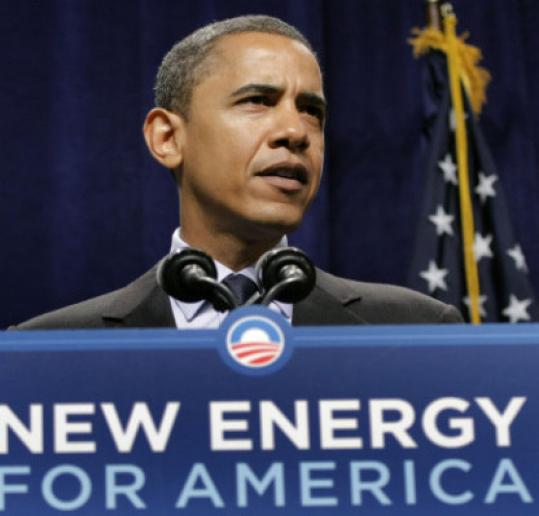
In a prepared video address delivered today at the Global Climate Summit in Los Angeles, CA, President-elect Barack Obama pledged to turn over "a new chapter in America's leadership on climate change."

In the short address, viewed by an audience that includes leaders from around the nation and the world, Obama emphasized the importance of the upcoming international climate negotiations in Poznan, Poland, and said he was "looking forward to working with all nations to meet [the climate] challenge in the coming years."

Obama reconfirmed his campaign commitments to reduce greenhouse gas emissions 80% by 2050 through a national cap and trade program and again pledged to "invest $15 billion each year to catalyze private sector efforts to build a clean energy future."

Convened by California Governor Arnold Schwarzenegger and other US governors on the forefront of global warming solutions, the Bi-partisan Governors Global Climate Summit convenes in Los Angeles today and begins two days of dialog designed to spur global cooperation on climate change in advance of the UN-sponsored talks in Poland next month. To this crowd of climate leaders, Obama said:
"Few challenges facing America -- and the world -- are more urgent than combating climate change. Many of you are working to confront this challenge....but too often, Washington has failed to show the same kind of leadership. That will change when I take office."
Watch the short video address below (full transcript below the fold):


Remarks as Delivered:

Let me begin by thanking the bipartisan group of U.S. governors who convened this meeting.

Few challenges facing America – and the world – are more urgent than combating climate change. The science is beyond dispute and the facts are clear. Sea levels are rising. Coastlines are shrinking. We've seen record drought, spreading famine, and storms that are growing stronger with each passing hurricane season.

Climate change and our dependence on foreign oil, if left unaddressed, will continue to weaken our economy and threaten our national security.

I know many of you are working to confront this challenge. In particular, I want to commend Governor Sebelius, Governor Doyle, Governor Crist, Governor Blagojevich and your host, Governor Schwarzenegger –all of you have shown true leadership in the fight to combat global warming. And we've also seen a number of businesses doing their part by investing in clean energy technologies.

But too often, Washington has failed to show the same kind of leadership. That will change when I take office. My presidency will mark a new chapter in America's leadership on climate change that will strengthen our security and create millions of new jobs in the process.

That will start with a federal cap and trade system. We will establish strong annual targets that set us on a course to reduce emissions to their 1990 levels by 2020 and reduce them an additional 80% by 2050.

Further, we will invest $15 billion each year to catalyze private sector efforts to build a clean energy future. We will invest in solar power, wind power, and next generation biofuels. We will tap nuclear power, while making sure it's safe. And we will develop clean coal technologies.

This investment will not only help us reduce our dependence on foreign oil, making the United States more secure. And it will not only help us bring about a clean energy future, saving our planet. It will also help us transform our industries and steer our country out of this economic crisis by generating five million new green jobs that pay well and can't be outsourced.

But the truth is, the United States cannot meet this challenge alone. Solving this problem will require all of us working together. I understand that your meeting is being attended by government officials from over a dozen countries, including the UK, Canada and Mexico, Brazil and Chile, Poland and Australia, India and Indonesia. And I look forward to working with all nations to meet this challenge in the coming years.

Let me also say a special word to the delegates from around the world who will gather at Poland next month: your work is vital to the planet. While I won't be President at the time of your meeting and while the United States has only one President at a time, I've asked Members of Congress who are attending the conference as observers to report back to me on what they learn there.

And once I take office, you can be sure that the United States will once again engage vigorously in these negotiations, and help lead the world toward a new era of global cooperation on climate change.

Now is the time to confront this challenge once and for all. Delay is no longer an option. Denial is no longer an acceptable response. The stakes are too high. The consequences, too serious.

Stopping climate change won't be easy. It won't happen overnight. But I promise you this: When I am President, any governor who's willing to promote clean energy will have a partner in the White House. Any company that's willing to invest in clean energy will have an ally in Washington. And any nation that's willing to join the cause of combating climate change will have an ally in the United States of America. Thank you.

##

Friday, November 07, 2008

Post-election Poll Confirms Bipartisan Support for Barack Obama's Clean Energy Plans

Cross-posted from the Breakthrough Institute and WattHead - Energy News and Commentary

This week, we've been writing about President-elect Barack Obama's powerful mandate to build a new, clean energy economy and revitalize our nation's ailing economy. A new post-election poll from Zogby Interactive confirms that Americans overwhelmingly view new investments in clean energy as critical to revitalizing America's ailing economy.

The poll found that more than three out of four voters - 78% - support clean energy investments to revitalize the economy, with 50% saying they strongly agree that clean energy investment is vital to the nation's economic future.

Clean energy investments enjoy broad, bipartisan support as well, the poll found. According to Zogby:

"While the vast majority of Democrats (96%) and independent voters (77%) view clean energy investment as a key means to boost the U.S. economy, more than half of Republican voters (58%) also said the same."


Support for clean energy investments is strongest among young voters, African Americans and latinos, three demographics that were critical to Obama's landslide electoral success. Zogby found that:

"Support for clean energy investment is particularly strong among younger voters - 87% of those age 18-24 and 80% of those age 18-29 believe this type of investment is necessary to help improve the U.S. economy. African American voters (94%) and Hispanic voters (84%) also showed overwhelming support for clean energy investment."


"While the economy was the top issue in the 2008 election, clean energy clearly emerged as part of voter expectations for getting the economy back on track," said John Zogby, President and CEO of Zogby International. "Support for action on global warming, already strong in the 2006 election, was even stronger in 2008, particularly among young voters that are the future electorate."

The Zogby Interactive survey of 3,357 voters nationwide was conducted Nov. 5-6, 2008, and carries a margin of error of +/- 1.7 percentage points. The survey was commissioned by the National Wildlife Federation.

President-elect Barack Obama's New Energy Mandate, Part 2

Part 2: Dos and Don'ts

Cross-posted from the Breakthrough Institute and WattHead - Energy News and Commentary

This is the second post in a continuing series delving into Barack Obama's opportunity to capture this political moment and provide a direction for energy policy and economic growth in the 21st century. Part 1 is here.

As Barack Obama assumes the mantle of President-elect of the United States of America, we are witnessing an historic realignment of the American political landscape. With the election of our nation's first African-American president, record voter turnout, and a dramatically redrawn electoral map, it seems that anything is possible now.

However, while Obama clearly has a new mandate to lead our nation, electoral mandates are fickle and even this one could fade in time. President-elect Obama has just 76 days to prepare for his inauguration. Then the real work of governing will begin, and what Obama decides to do in his first 100 days will either cement or erase the wave of popular support the President-elect rides today.

His job won't be easy. On January 20th, President-elect Obama will inherit the White House along with a plethora of pressing challenges all competing for his attention. There will be no time for baby steps, and President Obama must show bold and effective leadership right out of the gate. Furthermore, while the economic crisis will remain his top concern in the short-run, Obama cannot afford to ignore longer-term challenges and must develop synergistic solutions that can tackle multiple problems at once.

Thankfully, Barack Obama has stated that building a new energy economy will be his top priority upon assuming office. If he fully integrates this effort with his shorter-term economic stimulus plans, Obama could effectively tackle several priorities - economy recovery, energy security, and global warming - simultaneously. And getting this job done right could cement Obama's electoral mandate and pave the way for a truly transcendent presidency.


With the all the frantic focus on economic stimulus these days, it's easy to forget that Obama really faces two economic challenges. Yes, we need quick, effective, short term stimulus to pull our nation out of recession. But we also face a longer run economic revitalization challenge that is critical to ensuring our nation's prolonged prosperity.

For too long, we have neglected to invest in our nation. We've let or infrastructure crumble, our schools and universities want for funding, and we've neglected the once-solid pipelines of technological innovation that made us the envy of the world. Blinded by an era of cheap credit and unrestrained consumer spending and bound by a dominant and dogmatic market fundamentalist philosophy of governance, we've seen the light go out of our once vibrant economy. Rekindling the flame of American prosperity will no doubt be the defining task of the Obama administration.

Obama has already made it clear that he believes a new energy economy will be America's next engine of growth. That's smart. There are few (if any) other major growth sectors waiting to be spurred, and building a new energy economy knits together his central economic challenges with other national priorities. And if Obama makes the right decisions in the coming months, his short-term stimulus agenda can be an effective bridge to the longer-term investments necessary to build a new energy economy and secure prolonged American prosperity.

To get it right there a few things President-elect Obama should avoid doing:

  • DON'T be afraid of deficit spending. Obama should ignore the counsel he will no doubt receive from deficit hawks and Clinton-era small-government Democrats to avoid deficit spending and stick to pay-go. And he should not listen if Greens council him to use a full-on cap and trade program to fund all of the spending for his new energy economy agenda. As the spender and lender of last resort during times of economic crisis, reining in government spending would be just as bad for the economy as raising taxes.

    The fact is, deficit spending is necessary for effective stimulus and it's smart for longer-term investments that will net returns for the U.S. Treasury. And with so much demand for U.S. Treasury Bonds, yields on two-year bonds are just 1.3%. After factoring in inflation, that means the government can borrow money essentially for free. All this means that President Obama shouldn't be afraid to borrow and invest if it helps get our nation out of today's recession and lay the groundwork for a new energy economy.

  • DON'T focus on short-term stimulus only. That being said, Obama also cannot afford a myopic focus on stimulus alone or rely solely (or even at all) on cash rebate checks.

    While quick-acting, cash rebate checks are not a particularly effective form of stimulus. In fact, initial studies find considerable evidence that most of the 2008 stimulus checks were put into savings or used to pay down debt. Furthermore, when they do work, rebate checks significantly under-perform investments in infrastructure and direct aid to state governments.

    Perhaps most importantly, if Obama relies on rebate checks to stimulate the economy, he will miss the golden opportunity to make his stimulus investments a bridge to longer-term priorities, like sparking a new energy economy. Given the many challenges he faces as president, Obama cannot afford to miss that opportunity.

  • DON'T propose policies that raise energy bills. While a carbon price would be an important accelerator of clean energy investment and innovation, offering policies that raise energy prices at a time of economic insecurity is a risky political venture (to say the least). Instead, Obama should make the development of clean, affordable energy sources the explicit focus of his policies. To the degree that carbon pricing plays a role in his new energy agenda, President Obama must be clear that the revenue raised will be directly invested in programs that reduce the cost of clean energy alternatives and in energy efficiency programs that will slash the energy bills of households and businesses.

  • DON'T promise short-term fixes to high gas prices. There simply aren't any, and Obama would be smart to use his new bully pulpit and impressive communication skills to make that fact clear to the American public.

    The false promise of "Drill Baby, Drill!" is a disingenuous myth that President Obama should put to rest for good. Oil prices are set in a global commodity market, and the United States simply lacks sizable enough domestic production capacity to have a significant moderating effect on oil prices. If we want to moderate oil prices, we can't do it with a focus on the supply side of the equation, a fact Obama has correctly emphasized by repeatedly saying, "We can't drill our way out of our energy crisis."

    If we want to expand domestic oil production, it shouldn't be motivated by false promises of lower gas prices. To the extent that we do expand drilling operations, it should be to raise revenues for public investment in a new energy economy, or to (modestly) enhance our trade deficit.

    Obama also should make good on his promise to speak openly and honestly to the American people about the challenges we face: the American public needs to hear their President say that while gas and oil prices are low today, they will not remain so for long. According to the International Energy Agency, oil prices will rebound to well above $100 per barrel as soon as the global economy recovers, adding dead-weight just as our economy struggles to stand again. That means that today's temporary relief from $4.00/gallon gas is exactly the time to invest in new, affordable alternatives and efforts to sever our dependence on oil. If he's clear and honest about the challenge of oil dependency, Obama will have further reason to invest in a new energy economy and launch the critical, long-term effort to electrify transportation and create the clean, cheap energy sources we need. If implemented, this strategy will finally free our nation from the volatility of oil prices and the havoc gas price spikes wreck on our economy.

  • DON'T: separate out his clean energy and economic agendas. For too long, clean energy policy was the domain of a relatively isolated environmentalist agenda. Despite it's widespread impacts on issues of national security, economic prosperity and public health, clean energy failed to take it's rightful place as a core progressive issue.

    Now, Obama has successfully transformed clean energy into a bread and butter economic issue. During the closing weeks of the campaign, Obama's clean energy agenda became fully intertwined with his economic recovery plans, and that's exactly where it should stay. A clean energy program will be most effective when fully integrated with the President-elect's economic recovery plans and it should remain a core component of his vision for renewed, long-term prosperity. Clean energy is an economic not environmental issue now, and that's exactly right.
In Part 3 of this ongoing series, we will outline several principles for smart investments in our nation's recovery and the birth of a new energy economy.

President-elect Barack Obama's New Energy Mandate, Part 1

Building a New Energy Economy
Cross-posted from the Breakthrough Blog and WattHead - Energy News and Commentary

Energy policy has never featured more prominently in a presidential election. Both candidates leaned strongly on their energy agendas during the campaign, frequently highlighting their plans to increase America's energy security, reduce energy prices and create jobs.

But while both candidates agreed that energy was a high priority and rhetorically supported an "all of the above" approach to new energy sources, the two candidates proposals actually differed sharply.

Furthermore, Barack Obama enjoyed the most success when his energy proposals were linked to his plans for economic recovery and couched in the rhetoric of job creation. That makes Obama's historic victory a clear endorsement of the President-elect's plans to invest in a new energy economy and argues for further integration of his energy plans into his economic recovery agenda.

While he claimed to support an "all of the above" energy plan, John McCain's energy platform revolved around increasing domestic production of oil and nuclear power.

McCain repeatedly touted nuclear power as his favorite (if not only) answer to our nation's energy challenge, and "Drill Baby, Drill!" practically became the all-encompassing mantra of the Republican party and it's presidential nominee.

McCain's repeated absence from key clean energy votes in the Senate and the selection of Sarah Palin as his running mate and supposed energy czar was the final proof that a McCain-Palin administration would focus centrally on expanding the old energy sources of the 19th and 20th century - oil and nuclear power - rather than the new energy sources of the future.

In contrast, while Barack Obama eventually embraced expanded drilling, he truthfully told the American people that "we can't drill our way out of our energy crisis." Similarly, he voiced conditional support for nuclear power, but made it clear that unresolved issues with nuclear waste and security needed to be addressed before nukes could play a central role in America's energy future.

Instead, Obama called for the creation of a comprehensive new energy economy, with a central focus on increasing vehicle fuel efficiency, electrifying transportation, expanding renewable energy production and retrofitting millions of homes and businesses to be more energy efficient. He considers this effort a new "national project" and promised to fund it to the tune of at least $150 billion over ten years.

Interestingly, Obama didn't really find his voice on energy policy until the economic crisis hit, unseating energy as the top campaign issue.

Back in September, when energy prices were the top election issue and Americans were shouting for quick fixes, Obama fumbled for an adequate response. In many ways, this was understandable, since there really are no quick fixes for high gas prices (that is, unless you consider the Bush energy plan - crashing the global economy! - to be a viable solution).

So while Obama had long-ago outlined a detailed and comprehensive energy plan that would spur the creation of clean and affordable new sources of energy in the long-term, he must have felt that telling the American people there was no short-term answer was a dangerous move. It certainly wasn't what Americans wanted to hear, but by remaining largely silent, Obama quickly found himself in the darkest days of the campaign.

Republicans had no qualms about proposing disingenuous solutions to spiking prices at the pump and quickly rallied around "Drill, Baby Drill!" It worked. McCain surged, taking the lead in the polls, and for the first half of September, it looked like Obama was headed towards defeat.

Then the economic crisis hit in all it's fury, and everything changed. The threat of global recession caused oil prices to fall almost as quickly as the Dow, and fears of another Great Depression displaced nearly every other concern.

That's when Obama realized that he was holding an ace up his sleeve: his energy plan.

In the closing weeks of the campaign, Obama hit his stride and brought his energy plan front and center. He touted opportunities to strengthen the American auto industry, bring manufacturing jobs back to American towns and save energy and money while creating new jobs in the energy efficiency sector. And in speech after speech, whenever he mentioned economic recovery and job creation, he talked about investments in clean energy and energy efficiency.

As he outlined his economic recovery plan on October 13th, Obama reiterated his pledge to "create 5 million new, high-wage jobs by investing in ... renewable sources of energy." He included funding for "energy efficient school and infrastructure repairs" in his Jobs and Growth Fund proposal and called on Congress to fast track "$50 billion in loan guarantees to help the auto industry retool, develop new battery technologies and produce the next generation of fuel efficient cars here in America."

In an October 22nd interview with Time magazine's Joe Klien, Obama clearly stated, "[Building a new energy economy] is going to be my No. 1 priority when I get into office," saying, "there is no better potential driver that pervades all aspects of our economy than a new energy economy."

A week later, Obama aired his thirty-minute October 29th TV special, "American Voices, American Stories." In it, he highlighted Seattle-based energy efficiency specialists, McKinstry Company as "a model for the nation," and again pledged to "invest $15 billion a year in energy efficiency and renewable sources of energy, like wind, solar, and biofuels, creating five million clean energy jobs over the next decade -- jobs that pay well and can never be outsourced."

In versions of his "closing argument" speech delivered across swing states in the final week of the election, Obama called for the creation of "an economy that rewards work and creates prosperity from the bottom up," exhorting America to "invest in... renewable energy for our future."

Finally, in his victory speech last night, he reiterated this theme, saying, "There is new energy to harness and new jobs to be created!"

History will record energy and the economy as the top issues of the 2008 presidential campaign. In the face of the mounting financial crisis, Barack Obama's calm assurance was the leadership the electorate was looking for. And as he successfuly united his clean energy and economic recovery proposals, Obama provided the vision of renewed prosperity Americans were hungry for.

Obama's landslide victory carries with it a clear mandate to build the new energy economy he so frequently spoke of. But he should be clear-eyed that this mandate derives from the economic crisis and continue to pursue his energy agenda hand-in-hand with his economic recovery plans.

With so many pressing concerns facing our nation, there will be little time for Obama to tackle issues one at a time. Instead, our nation's 44th President must find innovative and synergistic solutions that can address several priorities at once. We will see his abilities quickly tested. Even before Inauguration Day, Obama will be counted on to offer an economic stimulus agenda, and he'll be expected to act upon his self-selected No. 1 priority, - building a new energy economy - immediately upon assuming office. In fact, the fate of the Obama presidency may very well hang on his performance on this critical first test.

In Part 2 of this series, we will focus on how President-elect Barack Obama can get the job done right and advance an integrated clean energy and economic recovery agenda in his first 100 Days in office.

Wednesday, November 05, 2008

Waxman Challenges Dingell for Leadership of Influental House Committee

Cross-posted from the Breakthrough Institute

Representative Henry Waxman (D-CA) plans to challenge venerable Representative John Dingell (D-MI) for chairmanship of the influential House Energy and Commerce Committee, according to a report from Roll Call.

"The move marks a major showdown between two Democratic powerhouses, with implications for a host of major legislation next year from health care to global warming to renewable energy. Waxman currently chairs the Oversight and Government Reform panel."

The House Energy and Commerce Committee has jurisdiction over a wide range of critical issues, including energy policy, health care, interstate commerce issues and most likely global warming policy as well. The committee will no doubt be a critical player in the legislative implementation of President-elect Obama's policy agenda.

Waxman and Dingell have taken two dramatically different stances on global warming and energy during the 110th Congress and a change in chairmanship could reshape the Congressional political landscape on these issues.

Reflecting their differing constituencies, Dingell opposed California (and 15 other states') efforts to set tailpipe emissions standards for greenhouse gases while Waxman led hearings to press EPA Administrator Stephen Johnson on why the agency had blocked California's efforts.

The difference is just as clear when it comes to federal climate policy. In March 2007, Waxman introduced the Safe Climate Act, still the most aggressive proposal for global warming pollution caps in the Congress. In contrast, Dingell and his committee waited until the final hours of the 110th Congress to release a draft outline for economy-wide greenhouse gas regulations.

Roll Call reports that a number of other key House leadership races were also underway, less than 24 hours after the polls closed.


A hat tip to Brad Johnson at the Wonk Room on this one

Thursday, October 30, 2008

Forget Joe the (Unlisenced) Plumber: Here's Troy the Wind Turbine Builder

Cross-posted from WattHead - Energy News and Commentary

Here's the voice of just one of millions of new, clean energy jobs we can create if we spark a new energy economy. Barack Obama has said it's his top priority if elected, so we should expect more people like Troy the wind turbine builder to find well-paying, dignified work that helps put America back on track.


Hat tip to Clean Tech and Green Businesses for Obama.

Tuesday, August 26, 2008

A Pivotal Moment

Cross-posted from the Breakthrough Blog and WattHead - Energy News and Commentary...

With Americans focused on energy prices as never before, a game-changing shift is occurring in the American political climate. The time has come for climate and clean energy advocates to adopt a new strategy and policy agenda. Next year will see the inauguration of a new president, a new Congress, and a new international agreement on global warming. The moment is far too urgent to fall on our swords for a cap-and-trade agenda developed in an entirely different political environment.

There's one thing at the top of Americans' minds these days: energy prices. Prices at the pump have been hitting Americans hard for months now, and an overwhelming majority (87%) do not foresee things getting any better before the end of the year. As of June, concern for energy prices eclipsed the Iraq War as #2 on the Gallup monthly poll of top American concerns (just behind concerns over the ailing economy). And as Republicans and Democrats enter their conventions still sparring over oil drilling, energy is now the #1 election issue.

All of this paints a very clear picture of where Americans are at: they are focused on their pocketbooks, grimacing every time they head to the gas station to fill 'er up.

This new focus on energy prices is a game changer for the world of energy and climate policy.

On the one hand, these developments spell Trouble-with-a-capital-T for politicians and environmentalists pushing a climate-centered agenda and policy solutions aimed at capping and pricing carbon to reduce emissions. At a time of extreme sensitivity over energy prices, we cannot hope to price our way to deep reductions in global warming pollution.

On the other hand, energy now lies at the forefront of the American political environment in a way that it hasn't been since the Oil Shocks of the 1970s. This opens up a unique but urgent opportunity, a chance to advance a robust and bold new policy agenda centered on energy solutions.

Newt Gingrich and his "American Solutions" organization clearly recognized this opportunity. Their "Drill Here, Drill Now, Pay Less" petition garnered over 1.2 million signatures in a matter of weeks. This "drill here, pay less" meme has been so successful, GOP strategists now think energy might be the Republican party's last best hope this election season.

In response, environmentalists and Congressional Democrats scrambled to 'block and tackle' and stop the gathering momentum to simply Drill! Drill! Drill! for more oil. With drilling opponents beaten up by the "drill here, drill now" push, a compromise proposal seems increasingly likely.

Meanwhile, the push for climate policy seems to be on hold, as climate advocates attempt to regroup from the defeat of the Lieberman-Warner Climate Security Act. Once touted as a bipartisan proposal, the cap-and-trade bill ran into a Republican filibuster in June and failed to secure the support of at least ten Democratic senators. After the repeated failure and declining support for cap-and-trade in Congress, environmentalists and Congressional leaders are surely debating what the next move should be.

It's time to recognize that these two conversations - how do we halt the push for more oil drilling and how do we advance a new climate strategy - are really the same conversation. The question at the heart of both discussions is this: how do we meet Americans where they are at and give them compelling solutions to our mounting energy crisis?

In today's new political context of economic insecurity and energy price spikes, we must provide Americans with what they want: credible promises of affordable, abundant energy.

That calls for a critical pivot away from a focus on reducing greenhouse gas emissions and halting climate change and towards a new focus on making clean, cheap American energy sources a reality.

It's time to get serious about winning the frame game and make the critical pivot to a new message, a message that sounds something like this:

Oil is hurting our economy. Coal is poisoning our air. Both are threatening our climate and our future. It's time to make clean energy cheap and abundant. Which would you rather invest in? Coal and oil - the old, dirty, expensive stuff? Or clean, cheap, new American energy sources? Which will power America's future?

Americans are crying out for new energy solutions. They are hurting at the pump and ready to turn to anyone who can offer a credible path forward. Gingrich beat us to the punch, but the game isn't over.

Support for drilling as the solution to our energy woes seems to be pretty shallow, especially once alternatives are presented. We want somebody to do something, so in the absence of any compelling alternatives, the "drill here, pay less" meme is kicking our butts. But Americans aren't stupid. We understand that the old stuff really isn't working very well and that more of the same will not relieve the strain on our pocketbooks.

If climate and clean energy advocates consistently position the dirty, old, expensive, poisonous stuff on the one hand and present compelling examples of clean, new, renewable, stable, secure and affordable energy sources on the other hand, I think the choice for Americans will be pretty clear and easy. I also can't think of anything else that will work!

This pivot goes far beyond just fighting off a push for drilling and far deeper than simply adopting a new messaging veneer on top of the same old policies. It goes right to the core of our entire energy and climate agenda.

This kind of message - "make clean energy cheap and abundant" - is incompatible with a policy agenda that expects unrestrained carbon prices to do the heavy lifting in igniting a clean energy future - i.e. a "hard" cap-and-trade program without provisions to control the price of carbon. One could conclude that we should shy away from this new message and find one more consistent with the carbon pricing-based policy agenda that has been the focus of climate advocates for so long.

The conclusion I reach, however, is the exact opposite: we don't need to abandon the "clean, cheap energy" message in favor of cap-and-trade; we need to make this change in focus about more than just our message.

If we want this message to stick - and I believe the success or failure of our entire effort to advance a clean energy future may hinge upon that success - we need to adopt a policy framework that's actually in synch with our message. We need a policy agenda focused on developing clean and cheap energy for every American. If we don't, we'll soon find ourselves incoherent and inconsistent, and our message will fail when the public sees that.

The time has come to advance a compelling and effective set of solutions focused on making clean energy cheap and abundant, not making dirty energy expensive and scarce.

Gore's clean energy "moon-shot" speech was (almost) dead-on. He shifted the focus from climate change to the energy challenge and from reducing emissions to increasing clean energy production. Whether we make this transition to 100% clean energy in ten years, twenty, or longer, I think the timetable is far less important than the overall thrust of the message: we're going to make your energy cheap and clean and secure. And who wouldn't want that?

I'm sympathetic to arguments that failing to price global warming pollution at it's full societal cost is simply economically inefficient. And I understand that principles of justice would call for a push to make "polluters pay." However, as we develop our new suite of clean energy solutions, we must make sure that our policy is built as if politics actually mattered. Our ultimate success depends less on appeals to economic efficiency and principles of justice than it does on our ability to meet Americans where they are and overcome the vagaries of the U.S. Senate.

This new policy platform should be centered around a new national project of strategic investments necessary to spark a clean energy economy and develop cheap and clean energy for every American. Carbon pricing and regulation play a role here, but they cannot be the top-line items when it comes to messaging, nor are they likely to do the heavy lifting that unlocks our clean energy potential.

A policy like this is really the only way we're going to pass something in a political climate of high energy prices and economic insecurity, and the only way we'll enact a solution set that gets the job done.

Next year will see the inauguration of a new president, a new Congress, and a new international agreement on global warming. The moment is far too urgent to fall on our swords for a cap-and-trade agenda developed in an entirely different political environment than the one that exists today. Nor do we have time to just make Americans care enough about global warming to act.

What we have is a unique moment of opportunity when Americans are overwhelmingly concerned about energy and about energy prices, and hungry for new solutions. If we can credibly advance "make clean energy cheap and abundant" as an alternative to the "drill here, pay less" crowd, we can win the battle. In fact, it's probably the only way we can win.

Friday, March 07, 2008

Obama and Clinton Both Talking Up "Clean" Coal in Primary States

Both Barak Obama and Hillary Clinton have solid energy plans that, if implemented, would take America into a cleaner energy future. On energy and climate, like on so many other issues, both remaining Democratic contenders for the White House followed John Edwards' early example and developed bold clean energy and climate change plans late last year.

As David Roberts of Grist says, "Both would substantially cut greenhouse gas emissions and boost clean energy; both pitch sustainability as an issue of shared sacrifice and economic opportunity; both have an impressive grasp of the policy details."

In fact, when it comes to the two candidates' energy and climate plans, there's about as much distance between them as their current neck-and-neck delegate counts.

Obama and Clinton have something else in common we should all be taking note of: they've both been talking up so-called "clean" coal on the campaign trail, especially in coal-friendly primary states like Ohio and Wyoming.

Obama earned some well-deserved heat last summer for his seemingly friendly stance towards coal-to-liquids (CTL) synthetic fuel production. While CTL might help displace oil, the synthetic fuel results in up to twice as much greenhouse gas emissions as conventional gasoline. Obama has since "clarified" his position on CTL, saying he'll only support new plants if they decrease both oil use and GHG emissions (a tall order for this dirty fuel!).

Clinton has been pretty silent on CTL, but both candidates energy plans and stump speeches tout the potential of "clean" (aka slightly-less-deadly) coal technologies.

In coal-lovin' Ohio last week, Obama had this to say:

"Clean-coal technology should be part of [the] mix... We are the Saudi Arabia of coal."

And Clinton is just as bad. Her husband was out today touting "clean" coal to crowds in Wyoming (set to caucus on Saturday). From the Denver Post:
"At the University of Wyoming in Laramie, thousands of people braved icy winds and waited in long lines outside a campus arena to hear the former president speak. He answered with a speech that held them rapt even as he ranged from his wife's plans for universal health care to her plans for creating a technology that could burn Wyoming coal without generating greenhouse gases."

So what's wrong with a coal technology that lets us burn our most abundant domestic fossil fuel resource "without generating greenhouse gases." To answer that, I'll let you ask the fine citizens of West Virginia, or refer you to this video:


The short answer though, is that as long as you need dig coal out of the ground, it'll never be clean - particularly while coal companies employ the extremely destructive process of mountain-top removal strip mining to supply those "clean" coal plants with fuel.

Slightly-less-deadly, sure, but "clean?" Don't try to shovel me that!

As Jeff Biggers, the author of The United States of Appalachia: How Southern Mountaineers Brought Independence, Culture and Enlightenment to America, writes: "Clean coal: Never was there an oxymoron more insidious, or more dangerous to our public health."

Barak Obama has at least spoken publicly against mountaintop removal and strip-mining in both DC and Kentucky.

"We're tearing up the Appalachian Mountains because of our dependence on fossil fuels," Obama said at a campaign stop in Lexington Kentucky, sparking loud applause.

As of yet, the Clinton campaign has been silent on the practice of mountain top removal or strip mining.

Any energy plan that pledges to clean up coal must address both the combustion and extraction of the dirty fuel.

I sincerely hope that a President Obama will fight to end the practice of mountain top removal, which devastates both the environment and the lives of Appalachia. I also hope that Clinton's silence on the matter is merely oversight.

Neither candidate has yet convinced me that they their "clean" energy plans will not push an expansion of coal-fired power plants under the guise of "clean" coal that will accelerate mountain top coal mining and other strip mining and lead to expanded environmental and human devastation.

My question is this: what exactly do Obama and Clinton mean when they say "clean" coal? If this is what they have in mind (or what they are ignoring), then they can take their "clean" coal and shovel it!


Friday, November 23, 2007

Billy Parish Tells Congress "This Young Generation is Ready to Carry Out a Historic Power Shift"

The following is the testimony delivered by Energy Action Coalition co-founder and coordinator, Billy Parish before the House Select Committee on Global Warming and Energy Independence during Power Shift 2007 Lobby Day, November 5th, 2007.

It's taken me too long to get this posted, but it's well worth watching/reading. (The sound is not in synch with the video unfortunately, but here it is nonetheless. The full text is below the fold).

For those who were there, let us remember that we have delivered a loud and clear message to our leaders on Congress. For those who missed Billy's inspiring testimony, read on or listen to/watch the video. Let us all keep our call for "Green Jobs", "80% by '50" and "No New Coal" as loud and clear as it was on the 5th of November. Thanks Billy for this testimony and for all you've done:


Thank you, Chairman Markey, for inviting us here today. I want to also thank you and Speaker Pelosi for addressing Power Shift on Saturday night, and for your leadership over the past 30 years on these critical issues. I want to finally recognize the thousands of young people today standing shoulder to shoulder for the largest climate lobby day in U.S. history.

Remember, remember, the 5th of November. An unstoppable movement has taken root in every school and every community in this nation. A generation has come to Washington today to lead, to be heard, and to find allies in this Congress who are ready to do what is necessary to solve our climate crisis.

My name is Billy Parish, and I'm the coordinator of the Energy Action Coalition, a diverse alliance of 46 organizations working to support and strengthen the student and youth clean energy movement in the U.S. and Canada to create change for a clean, efficient, just and renewable energy future. I have brought with me our coalition's "Youth Statement of Principles on Climate and Energy" and other supporting documents for the Congressional record.

We come here today with three demands for Congress:

1. Create 5 million new jobs through a Clean Energy Corps to weatherize, solarize, rewire and rebuild this country. Let’s put people to work, and create green pathways out of poverty. Green Jobs Now! Green Jobs Now! Green Jobs Now!

2. Cut Carbon at least 80% by 2050, 30% by 2020 and auction 100% of the pollution allowances from day 1. Science tells us we can aim for nothing less. 80 by 50! 80 by 50! 80 by 50!

3. Pass an immediate moratorium on the construction of new coal plants. We should shift all federal subsidies from fossil fuels and nuclear to wind and solar, and create a just transition for workers from the old economy into the new green economy. No Coal! No Coal! No Coal!

We will be heard because at 50 million strong, the Millennial generation outnumbers even the Baby Boomers by 3 million and represents the single-largest demographic age group in this country. Polling data, recent voter turnout, and the swelling ranks and increasing coordination of the youth climate movement all demonstrate that this young generation is engaged and ready to carry out a historic Power Shift. Youth turnout in the past two elections hit the highest level in at least 20 years, and is only on the rise.

We are not alone: youth are assembling coalitions that are bringing together a diverse and powerful set of allies including unions, businesses, people of faith, farmers, civil rights groups and millions more. And we are not just here in D.C., we are in every Congressional district in America - and we are organizing.

Politicians would be wise to take note. Exactly one year from today, we will have a new Congress and a new President. You have one year to prove that you are worthy of being our “representatives” in this government – and if you don’t, you will need to look for a new job, as millions of young voters throw their support behind more progressive, pro-environment candidates committed to ending the climate crisis and protecting the future of our generation.

We will be heard because we are the ones we've been waiting for.

As the Bush Administration and our federal government has done almost nothing for the last seven years, young people have organized and made change. Through the Campus Climate Challenge, tens of thousands of young people have engaged in the hard work of making their schools models of sustainability for the rest of society. In just the last year, 426 colleges have committed to becoming climate neutral, and more sign on every day.

We are building partnerships with community groups to block the construction of new coal-fired power plants and launch a green wave of urban and rural renewal. As our government abandoned the people of New Orleans after Hurricane Katrina, tens of thousands of young people dropped everything to serve and rebuild. Over 6,000 of us came to Power Shift this weekend, thousands more took part in Step it Up around the country - a generation of solutions, but we know we cannot do it alone and have come to seek your help.

And we will be heard because we are, quite literally, fighting for our lives.

This can no longer be a political issue – for the survival of our people and our planet, we must put aside partisan politics and come together as humans, as mothers and fathers, sisters and brothers, to heal ourselves and our planet.

This is no small task.

As Evon Peter told us on Saturday night, this is not only an ecological and economic crisis, it is a spiritual and cultural crisis that is centuries old. We must begin the long process of reconciliation with the original peoples of this land, with the people that were brought here against their will, especially those from Africa, and all the people that are poorly served by our society. We cannot sacrifice communities for our overconsumption today, not only because it is wrong for those communities today but because we will be sacrificing the basis of life for our children and future generations.

I'm 26 years old and about to become a father. I implore the members of this 110th Congress to hear our demands – but I ask that you hear them not only as politicians, but also as mothers and fathers, sisters and brothers. We can do this if we work together, but we must begin today.

1. Green Jobs Now! Green Jobs Now! Green Jobs Now!

2. 80 by 50! 80 by 50! 80 by 50!

3. No Coal! No Coal! No Coal!

Thank you.

Other inspiring testimony from the Select Committee Hearing on Nov. 5th can be found online at The Gavel here.

Wednesday, October 24, 2007

Watch Out for the Echo-Boom: Why Politicians Had Better Start Paying Attention to the Millennial Generation

80 million teens and twenty-somethings are ready to make their mark on American politics. Is the growing youth climate movement - now poised to explode off campuses and into the nation's capitol for Power Shift 2007, the first national youth climate summit - the vanguard of a new progressive, pro-environment youth political movement?

By 2010, another 17.3 million young Americans will come of age, swelling the already sizable ranks of voting-age "Millennials" – those teens and twenty-somethings coming to age in the early years of the 21st century. At 80 million strong, the Millennial generation outnumbers even the Baby Boomers by 3 million and represents the single-largest demographic age group in electoral politics, according to a recent Mother Jones article ("The 50-Year Strategy", in the Nov/Dec 2007 issue - not online yet).

Polling data, recent voter turnout, and the swelling ranks and increasing coordination of the youth climate movement all demonstrate that this young generation is remarkably engaged, overwhelmingly progressive and pro-environment, and has largely rejected the "government-is-the-problem" conservative mentality that still dominates the general population (see table below).

General PopulationVoting-age Youth (age 18-25)Issue
58%
32%
agree that the federal government "is usually inefficient and wasteful"
52%
40%
say regulating business "does more harm than good"
49%
68%
say protecting the environment is at least as important as protecting jobs
47%
62%
favor tax-financed, government-administered universal health care
[Source: "The 50 Year Strategy", Mother Jones]

This young generation is razing the old stereotypes of the apathetic, unengaged youth that may have accurately characterized Generation Xers, as youth turnout in the past two elections hit the highest level in at least 20 years.

And the Millennials aren't simply waiting for politicians to take notice and seemingly won't content themselves with limiting their impact to the ballot box. In fact, they're demanding to be noticed, as thousands get ready to storm our nation's capitol to flex some political muscle in the first-ever national youth climate summit, Power Shift 2007, and rally at nationwide Step it Up actions in November.

According to www.PowerShift07.org, over 5,000 youth and students from across the country will soon explode off of campuses and converge on D.C. for Power Shift 2007, November 2nd-5th. With all 50 states represented, youth attending the conference will engage with solutions to global warming and learn how to effectively put solutions into practice as they cement the core of an increasingly sophisticated and coordinated nationwide youth climate movement.

Power Shift's agenda includes issue briefings from leading scientists and policy experts, training sessions, an opportunities fair, and additional networking opportunities, all designed to connect young leaders and use their collective experience to focus action on America's greener, more prosperous future.

That same weekend, tens of thousands more student and youth activists will join in hundreds of actions in their home communities as part of the second Step It Up nationwide day of action, Saturday, November 3rd (see www.StepItUp07.org).

Founded and organized by a group of Middlebury College students, recent grads, and their mentor, Bill McKibbon, Step It Up successfully organized 1,400 actions across the U.S. involving hundreds of thousands of citizens in their first nationwide day of action, April 14th, 2007. Thanks largely to these highly visible and well-attended actions – which demanded Congress “step it up” and cut carbon emissions 80% by 2050 – virtually all of the 2008 Democratic candidates for president are chanting the 80x2050"mantra in their stump speeches these days and striving to out-compete each other for the meanest, greenest energy plan. Sponsorship and support is also building behind bills in Congress that would tackle the climate crisis and put the 80x2050 plan into action.

This November, the young minds behind Step it Up 2 will be at it again, this time joined by the thousands of participants at Power Shift 2007 to demand real action to address the climate crisis and secure the future of today's youth. On Monday, November 5th, the youth at Power Shift will carry reports and pictures of the hundreds of Step It Up actions into the offices of their senators and representatives, as thousands of young people descend on Capitol Hill to make their voices heard.

If the increasing coordination, sophistication and activism of the youth climate movement is any indication, the Millennial generation has arrived on the political scene, and they are sure to make their mark.

According to Mother Jones authors Simon Rosenberg and Peter Leyden:
"[The Millennial] generation is politically engaged, votes in high numbers, and leans overwhelmingly Democratic. ... But the millennials' impact will show up beyond the ballot box. Polling data indicate that they are unusually civic minded (they volunteer at the highest level recorded for youths in 40 years, according to one study) and hold a wide range of progressive values ... [they] even believe in government again (Sixty-three percent think government should do more to solve the nation's problems)."
As the authors conclude, "This generation is poised to become the core of a 21st century progressive coalition."

It's clearly time for today's politicians to start paying serious attention to the Millennials – especially candidates in the 2008 elections.

According to Rosenberg and Leyden, if people under age 29 had been the only voters in the 2004 election, John Kerry would have won by a landslide with 372 electoral votes. And in the 2006 midterms, "the same age group went for Democrats over Republicans by 22 percent - an almost unheard-of margin."

When thousands of young people take to the streets in Step it Up actions and head to D.C. for Power Shift in a couple of weeks, politicians would be wise to take note. If they don't, they just might find themselves looking for a new job, as millions of young voters throw their support behind more progressive, pro-environment candidates committed to ending the climate crisis and protecting the future of the Millennial generation.

Monday, October 22, 2007

Generation Anything-But-Quiet: Just Wait for the Noise at Power Shift 2007!

The Youth Climate Movement is poised to explode off of campuses and into our nation’s capitol for PowerShift 2007, November 2nd-5th.

Thomas Friedman, the popular New York Times columnist, recently labeled teens and twenty-somethings coming to age in the early years of the 21st century the “Quiet Generation.” Accusing today’s young people of being “too quiet, too online for [their] own good, and for the country's own good,” Friedman went on to say that today’s students and youth are “so much less radical and politically engaged than they need to be.” (See “'Generation Q' - the Quiet Americans,” New York Times, Oct. 10th, 2007)

Well, in two weeks, Mr. Friedman – and the rest of the nation – will hear what this young generation really sounds like, and it will be anything but quiet! More than 3,300 young people will explode off of their campuses and away from the internet, descending – in person and in droves – on the nation’s capitol for Power Shift 2007, the first-ever national youth summit on global warming, November 2nd-5th.

Power Shift will bring together thousands of students and youth from all 50 states to wrestle with our generation’s greatest challenge and our greatest opportunity: The climate crisis. At the conference, attendees will learn new skills, share ideas, connect with fellow activists and ultimately use their collective experience, enthusiasm and commitment to forge a powerful movement to end the climate crisis and make their innovative and inspiring new vision of a sustainable, just, and prosperous future a reality.

The conference will be held November 2nd-5th in College Park, Maryland, just outside of Washington D.C. Power Shift’s agenda includes: keynote addresses from seasoned and inspiring activists, politicians, and leaders; up-to-the-minute issue briefings from the nation’s leading scientists and policy experts; expert-led training sessions on crucial movement-building skills including organizing, advocacy, and media relations; an “opportunities fair” featuring some of the country’s leading environmental employers; a lobby day on Capitol Hill; and plenty of opportunities for young activists to network and strengthen the bonds of a nationwide youth movement (see www.PowerShift07.org).

On Saturday, November 3rd, the activities of the thousands of young people attending Power Shift will join with and be amplified by the hundreds of actions taking place in communities across the nation as part of the second nationwide Step It Up day of action (www.StepItUp07.org).

April 14th, the first Step It Up day of action, saw over 1,400 events across the country involving hundreds of thousands of community-members, activists, and yes, youth, all calling for steep cuts in carbon emissions: at least 80% by 2050. The weekend of Power Shift, Step It Up activists will be at it again, and this time they’ll be asking who our nation’s real leaders are as they challenge politicians again to Step It Up!

The attendees at Power Shift will join with the Step It Up organizers on Saturday night for the joint keynote events of both Power Shift and Step It Up. Many thousands more young people who aren’t going to make the trip to Power Shift will be back home organizing, recruiting for, and attending Step it Up events in their communities. Wherever there’s a successful Step It Up event, you can bet that there’s the fire, passion, and innovative ideas of a member of “Generation Anything-But-Quiet” somewhere behind it.

And as if there won’t be enough packed into a weekend of organizing, training and action, on Monday, November 5th, more than a thousand youth and students will converge on Capitol Hill to flex their collective political muscle and do exactly what Mr. Friedman seems to think today’s young people are too timid to do – something most citizens are too timid to do – sit face-to-face with their representatives and senators, and speak the truth to power, demanding committed action to end the climate crisis.

Monday’s giant lobby day will begin with a morning rally on Capitol Hill’s West Lawn featuring members of the House and Senate leadership and leaders in the youth climate movement as speakers before teams of young citizens head for scheduled lobbying meetings with House and Senate members from all 50 states. The House Select Committee on Energy Independence and Global Warming has also scheduled a hearing Monday afternoon where young people directly affected by climate change will speak out on the issue. Youth witnesses representing the Arctic north, Appalachia, the Lower Ninth Ward of New Orleans, and other locations will testify on the urgency of the crisis and the importance of bold action.

Throughout the Power Shift conference, at lobby day, and at Step It Up events across the nation, young people will join with concerned citizens of all ages to demand Congress takes immediate action to implement the “1Sky” Climate Initiative (www.1skycampaign.org/) including:
  • creating 5 million new “green” jobs in the clean energy sector working to help save 20% of our energy by 2015;
  • immediately freezing climate pollution levels and cutting them at least 30% by 2020 and 80% by 2050;
  • and transforming our energy priorities from dirty, depleting, and often-imported fossil fuels to clean, renewable, and local energy sources, beginning with a moratorium on all new coal plants until they can safely dispose of their pollution.
Lobby day attendees will also demand that Congress pass a strong energy bill this fall as a down payment on the serious cuts in carbon emissions we urgently need. A bill that includes the best elements of the energy packages passed earlier this year by the House and Senate (including strong fuel economy standards, a national renewable electricity standard, and the reinvestment of federal subsidies from fossil fuels into renewable energy and energy efficiency) will be a critical first step towards the sustainable, just, and prosperous future today’s young climate activists are committed to making a reality.

After the Power Shift conference and lobby day, students and youth will return to their campuses and communities. They’ll probably be temporarily exhausted from all the action, but at the same time, they’ll be energized, empowered, and equipped to strengthen their nationwide movement and push for bold solutions on their campuses, in their communities, and in their state and national capitols.

How’s that for quiet, Mr. Freidman?


_________________________


Power Shift is organized by the Energy Action Coalition (www.energyaction.org), an alliance of more than 40 organizations from across the United States and Canada, founded and led by youth to help support and strengthen the student and youth clean energy movement in North America.

Energy Action Coalition groups have successfully launched campaigns on over 600 college and high school campuses through the Campus Climate Challenge and successfully won commitments from 400 college and university presidents to work towards complete climate neutrality at their institutions.

The blog “It’s Getting Hot in Here” (www.ItsGettingHotInHere.org) is the Energy Action Coalition’s outlet for the voices of the growing youth movement on climate change, is regularly visited by tens of thousands of readers from across the globe.

For more information on the Energy Action Coalition and its partners in Power Shift 2007:

For information on Step it Up and the 1Sky Campaign:

Tuesday, October 16, 2007

Step It UP! and the Power of the Click

[From ItsGettingHotInHere.org:]

Check out this recent op-ed in the L.A. Times by Bill McKibben on the internet, politics, and Step It Up 2007. The weekend of Power Shift 07, we're using the internet to get politicians back into communities around the country and asking for their plan to stop global warming - what other ways can our movement use the internet beyond the spread-the-word / fund-raise / information-sharing that we are doing now?

The Power of the Click
by Bill McKibben, LA Times, Oct. 16, 2007
The Internet is a maturing technology now. It's reached the point where we're figuring out how to do things that don't involve gambling, shopping or looking at the scantily clad. Politics, for instance. Politics in whole new ways that might change the balance of power between politician and citizen.

The 2004 election cycle saw one breakthrough. Especially on the left, candidates figured out how to raise money over the Web. Howard Dean was the pioneer. This time around, it's Barack Obama, who says he has amassed 300,000 contributors -- one American in 1,000 has given cash to his campaign, which is pretty remarkable.

For 2008, though, activists are trying to turn the Internet into something more than an ATM. We're trying to take the candidates out of their game plans and make them answer to our concerns, right now, before the votes are cast and while there's still some leverage. We're trying to use electrons to pin them down.

Those of us working on global warming, for instance, are focusing efforts this fall on Stepitup07.org. Last spring, we used this website to coordinate 1,400 simultaneous rallies in all 50 states calling for deep cuts in U.S. carbon emissions. On Nov. 3, we're staging another series of gatherings across the country, this time aimed squarely at politicians, trying to see if there are some Al-Gores-in-waiting out there, ready to actually lead on this issue.

Using a new "widget" -- a small, easy-to-share Web tool -- we're able to let people issue invitations to their politicians of choice to speak at these rallies. Since this project debuted early this month, more than 3,000 people have taken us up on it, inviting almost every member of Congress and all the presidential candidates. And some of those politicians are promising that they'll show up.

This is new. In days of yore, if you were concerned about, say, global warming, you might write a letter to your congressman. You might research the presidential candidates to figure out which one was most aggressive about climate change, and then you might mail him a check. But the chance to work together with people around the country on a common cause was mostly reserved for "organizations" -- for environmental groups, say, with big buildings in Washington, calendars and boards of directors.

In the Internet Age, though, new models emerge. When we ran those rallies last spring, we had help from the Sierra Club, the Natural Resources Defense Council and many others -- but we also had hundreds upon hundreds of organizers who had never done anything like it before.

In the course of six to eight weeks, they were able to parlay their e-mail lists of friends, family and contacts into geometrically expanding circles of potential protesters. For $100,000, we ran one of the largest days of environmental protest since the first Earth Day in 1970 -- and did it in the districts of members of Congress, not on the Mall in Washington.

Now, with our new "invite tool," you can sit at your computer and in 10 minutes ask every one of your political leaders for an RSVP. It feels as though we're starting to make them respond to our agenda, not the other way around.

We're finding, in other words, that a certain kind of organizing no longer requires years of groundwork. It requires a good idea and a well-written e-mail. MoveOn.org has been working this terrain for years; now groups like ours are trying to figure out how to mix real-world and virtual politics, how to work the system as nimbly and with as much savvy as the K Street lobbyists. We can't come up with $1,000 for a plate of dinner, but we can muster 1,000 people in 1,000 different places to demand action.

In certain ways, it's a lousy time to be coming of age -- those satellite photos last month of the rapidly melting Arctic ice cap foreshadowed a century that will be spent trying to deal with the greatest threat to stability that human civilization has ever encountered.

But the moment has also given us a new set of tools for connection. The fight against global warming requires all kinds of technology -- solar panels and windmills, but also servers and routers.

Bill McKibben, a scholar in residence at Middlebury College, is co-founder of Stepitup07.org and coauthor of the just-published "Fight Global Warming Now."
Click here to see the article at latimes.com