Showing posts with label alternative energy. Show all posts

Wednesday, November 25, 2009

Indian Renewable IPP Greenko gets 46 M$ funding from GEF

Private equity firm Global Environment Fund (GEF) announces the completion of an investment of $46.3 million in Greenko PLC, which is based in Hyderabad, India. Greenko is one of India’s largest independent power producers focused exclusively on renewable energy generation through the development, acquisition, construction, and operation of run-of-river hydro and biomass-fired plants. GEF is the only non-public investor and holds two seats on the Board of Directors of the company’s Mauritian subsidiary.

Since its formation in 2006, Greenko has sought to be a premier clean energy player in India, with a diverse portfolio of scaled renewable energy assets. GEF’s investment will accelerate the company’s growth objectives as it addresses the massive shortfalls in power supply needs in India in the coming years.

Anil Chalamalasetty, Chief Executive of Greenko, said, “We are delighted to receive funding from Global Environment Fund which shows confidence in Greenko’s business model and its long-term ambition to be a leading clean energy player in the fast growing Indian economy and energy markets. We believe GEF’s experience in investing in clean energy projects in other emerging economies will be a good value addition to the platform.”

H. Jeffrey Leonard, President, Chief Executive Officer and Founding Partner of GEF, commented, “GEF is pleased to enter into a long-term partnership with Greenko, a leading and scaled renewable energy platform in India with a robust pipeline of expansion opportunities. Consistent with GEF’s investment strategy, Greenko represents a proven management team that should help meet India’s need for sustainable sources of power in the future.”

Friday, November 07, 2008

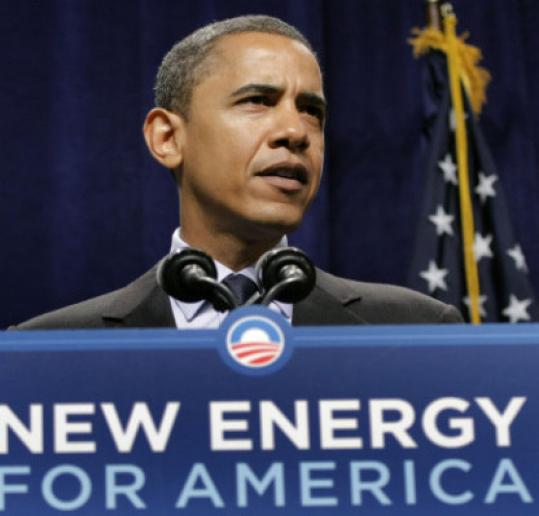
Post-election Poll Confirms Bipartisan Support for Barack Obama's Clean Energy Plans

Cross-posted from the Breakthrough Institute and WattHead - Energy News and Commentary

This week, we've been writing about President-elect Barack Obama's powerful mandate to build a new, clean energy economy and revitalize our nation's ailing economy. A new post-election poll from Zogby Interactive confirms that Americans overwhelmingly view new investments in clean energy as critical to revitalizing America's ailing economy.

The poll found that more than three out of four voters - 78% - support clean energy investments to revitalize the economy, with 50% saying they strongly agree that clean energy investment is vital to the nation's economic future.

Clean energy investments enjoy broad, bipartisan support as well, the poll found. According to Zogby:

"While the vast majority of Democrats (96%) and independent voters (77%) view clean energy investment as a key means to boost the U.S. economy, more than half of Republican voters (58%) also said the same."


Support for clean energy investments is strongest among young voters, African Americans and latinos, three demographics that were critical to Obama's landslide electoral success. Zogby found that:

"Support for clean energy investment is particularly strong among younger voters - 87% of those age 18-24 and 80% of those age 18-29 believe this type of investment is necessary to help improve the U.S. economy. African American voters (94%) and Hispanic voters (84%) also showed overwhelming support for clean energy investment."


"While the economy was the top issue in the 2008 election, clean energy clearly emerged as part of voter expectations for getting the economy back on track," said John Zogby, President and CEO of Zogby International. "Support for action on global warming, already strong in the 2006 election, was even stronger in 2008, particularly among young voters that are the future electorate."

The Zogby Interactive survey of 3,357 voters nationwide was conducted Nov. 5-6, 2008, and carries a margin of error of +/- 1.7 percentage points. The survey was commissioned by the National Wildlife Federation.

President-elect Barack Obama's New Energy Mandate, Part 2

Part 2: Dos and Don'ts

Cross-posted from the Breakthrough Institute and WattHead - Energy News and Commentary

This is the second post in a continuing series delving into Barack Obama's opportunity to capture this political moment and provide a direction for energy policy and economic growth in the 21st century. Part 1 is here.

As Barack Obama assumes the mantle of President-elect of the United States of America, we are witnessing an historic realignment of the American political landscape. With the election of our nation's first African-American president, record voter turnout, and a dramatically redrawn electoral map, it seems that anything is possible now.

However, while Obama clearly has a new mandate to lead our nation, electoral mandates are fickle and even this one could fade in time. President-elect Obama has just 76 days to prepare for his inauguration. Then the real work of governing will begin, and what Obama decides to do in his first 100 days will either cement or erase the wave of popular support the President-elect rides today.

His job won't be easy. On January 20th, President-elect Obama will inherit the White House along with a plethora of pressing challenges all competing for his attention. There will be no time for baby steps, and President Obama must show bold and effective leadership right out of the gate. Furthermore, while the economic crisis will remain his top concern in the short-run, Obama cannot afford to ignore longer-term challenges and must develop synergistic solutions that can tackle multiple problems at once.

Thankfully, Barack Obama has stated that building a new energy economy will be his top priority upon assuming office. If he fully integrates this effort with his shorter-term economic stimulus plans, Obama could effectively tackle several priorities - economy recovery, energy security, and global warming - simultaneously. And getting this job done right could cement Obama's electoral mandate and pave the way for a truly transcendent presidency.


With the all the frantic focus on economic stimulus these days, it's easy to forget that Obama really faces two economic challenges. Yes, we need quick, effective, short term stimulus to pull our nation out of recession. But we also face a longer run economic revitalization challenge that is critical to ensuring our nation's prolonged prosperity.

For too long, we have neglected to invest in our nation. We've let or infrastructure crumble, our schools and universities want for funding, and we've neglected the once-solid pipelines of technological innovation that made us the envy of the world. Blinded by an era of cheap credit and unrestrained consumer spending and bound by a dominant and dogmatic market fundamentalist philosophy of governance, we've seen the light go out of our once vibrant economy. Rekindling the flame of American prosperity will no doubt be the defining task of the Obama administration.

Obama has already made it clear that he believes a new energy economy will be America's next engine of growth. That's smart. There are few (if any) other major growth sectors waiting to be spurred, and building a new energy economy knits together his central economic challenges with other national priorities. And if Obama makes the right decisions in the coming months, his short-term stimulus agenda can be an effective bridge to the longer-term investments necessary to build a new energy economy and secure prolonged American prosperity.

To get it right there a few things President-elect Obama should avoid doing:

  • DON'T be afraid of deficit spending. Obama should ignore the counsel he will no doubt receive from deficit hawks and Clinton-era small-government Democrats to avoid deficit spending and stick to pay-go. And he should not listen if Greens council him to use a full-on cap and trade program to fund all of the spending for his new energy economy agenda. As the spender and lender of last resort during times of economic crisis, reining in government spending would be just as bad for the economy as raising taxes.

    The fact is, deficit spending is necessary for effective stimulus and it's smart for longer-term investments that will net returns for the U.S. Treasury. And with so much demand for U.S. Treasury Bonds, yields on two-year bonds are just 1.3%. After factoring in inflation, that means the government can borrow money essentially for free. All this means that President Obama shouldn't be afraid to borrow and invest if it helps get our nation out of today's recession and lay the groundwork for a new energy economy.

  • DON'T focus on short-term stimulus only. That being said, Obama also cannot afford a myopic focus on stimulus alone or rely solely (or even at all) on cash rebate checks.

    While quick-acting, cash rebate checks are not a particularly effective form of stimulus. In fact, initial studies find considerable evidence that most of the 2008 stimulus checks were put into savings or used to pay down debt. Furthermore, when they do work, rebate checks significantly under-perform investments in infrastructure and direct aid to state governments.

    Perhaps most importantly, if Obama relies on rebate checks to stimulate the economy, he will miss the golden opportunity to make his stimulus investments a bridge to longer-term priorities, like sparking a new energy economy. Given the many challenges he faces as president, Obama cannot afford to miss that opportunity.

  • DON'T propose policies that raise energy bills. While a carbon price would be an important accelerator of clean energy investment and innovation, offering policies that raise energy prices at a time of economic insecurity is a risky political venture (to say the least). Instead, Obama should make the development of clean, affordable energy sources the explicit focus of his policies. To the degree that carbon pricing plays a role in his new energy agenda, President Obama must be clear that the revenue raised will be directly invested in programs that reduce the cost of clean energy alternatives and in energy efficiency programs that will slash the energy bills of households and businesses.

  • DON'T promise short-term fixes to high gas prices. There simply aren't any, and Obama would be smart to use his new bully pulpit and impressive communication skills to make that fact clear to the American public.

    The false promise of "Drill Baby, Drill!" is a disingenuous myth that President Obama should put to rest for good. Oil prices are set in a global commodity market, and the United States simply lacks sizable enough domestic production capacity to have a significant moderating effect on oil prices. If we want to moderate oil prices, we can't do it with a focus on the supply side of the equation, a fact Obama has correctly emphasized by repeatedly saying, "We can't drill our way out of our energy crisis."

    If we want to expand domestic oil production, it shouldn't be motivated by false promises of lower gas prices. To the extent that we do expand drilling operations, it should be to raise revenues for public investment in a new energy economy, or to (modestly) enhance our trade deficit.

    Obama also should make good on his promise to speak openly and honestly to the American people about the challenges we face: the American public needs to hear their President say that while gas and oil prices are low today, they will not remain so for long. According to the International Energy Agency, oil prices will rebound to well above $100 per barrel as soon as the global economy recovers, adding dead-weight just as our economy struggles to stand again. That means that today's temporary relief from $4.00/gallon gas is exactly the time to invest in new, affordable alternatives and efforts to sever our dependence on oil. If he's clear and honest about the challenge of oil dependency, Obama will have further reason to invest in a new energy economy and launch the critical, long-term effort to electrify transportation and create the clean, cheap energy sources we need. If implemented, this strategy will finally free our nation from the volatility of oil prices and the havoc gas price spikes wreck on our economy.

  • DON'T: separate out his clean energy and economic agendas. For too long, clean energy policy was the domain of a relatively isolated environmentalist agenda. Despite it's widespread impacts on issues of national security, economic prosperity and public health, clean energy failed to take it's rightful place as a core progressive issue.

    Now, Obama has successfully transformed clean energy into a bread and butter economic issue. During the closing weeks of the campaign, Obama's clean energy agenda became fully intertwined with his economic recovery plans, and that's exactly where it should stay. A clean energy program will be most effective when fully integrated with the President-elect's economic recovery plans and it should remain a core component of his vision for renewed, long-term prosperity. Clean energy is an economic not environmental issue now, and that's exactly right.
In Part 3 of this ongoing series, we will outline several principles for smart investments in our nation's recovery and the birth of a new energy economy.

President-elect Barack Obama's New Energy Mandate, Part 1

Building a New Energy Economy
Cross-posted from the Breakthrough Blog and WattHead - Energy News and Commentary

Energy policy has never featured more prominently in a presidential election. Both candidates leaned strongly on their energy agendas during the campaign, frequently highlighting their plans to increase America's energy security, reduce energy prices and create jobs.

But while both candidates agreed that energy was a high priority and rhetorically supported an "all of the above" approach to new energy sources, the two candidates proposals actually differed sharply.

Furthermore, Barack Obama enjoyed the most success when his energy proposals were linked to his plans for economic recovery and couched in the rhetoric of job creation. That makes Obama's historic victory a clear endorsement of the President-elect's plans to invest in a new energy economy and argues for further integration of his energy plans into his economic recovery agenda.

While he claimed to support an "all of the above" energy plan, John McCain's energy platform revolved around increasing domestic production of oil and nuclear power.

McCain repeatedly touted nuclear power as his favorite (if not only) answer to our nation's energy challenge, and "Drill Baby, Drill!" practically became the all-encompassing mantra of the Republican party and it's presidential nominee.

McCain's repeated absence from key clean energy votes in the Senate and the selection of Sarah Palin as his running mate and supposed energy czar was the final proof that a McCain-Palin administration would focus centrally on expanding the old energy sources of the 19th and 20th century - oil and nuclear power - rather than the new energy sources of the future.

In contrast, while Barack Obama eventually embraced expanded drilling, he truthfully told the American people that "we can't drill our way out of our energy crisis." Similarly, he voiced conditional support for nuclear power, but made it clear that unresolved issues with nuclear waste and security needed to be addressed before nukes could play a central role in America's energy future.

Instead, Obama called for the creation of a comprehensive new energy economy, with a central focus on increasing vehicle fuel efficiency, electrifying transportation, expanding renewable energy production and retrofitting millions of homes and businesses to be more energy efficient. He considers this effort a new "national project" and promised to fund it to the tune of at least $150 billion over ten years.

Interestingly, Obama didn't really find his voice on energy policy until the economic crisis hit, unseating energy as the top campaign issue.

Back in September, when energy prices were the top election issue and Americans were shouting for quick fixes, Obama fumbled for an adequate response. In many ways, this was understandable, since there really are no quick fixes for high gas prices (that is, unless you consider the Bush energy plan - crashing the global economy! - to be a viable solution).

So while Obama had long-ago outlined a detailed and comprehensive energy plan that would spur the creation of clean and affordable new sources of energy in the long-term, he must have felt that telling the American people there was no short-term answer was a dangerous move. It certainly wasn't what Americans wanted to hear, but by remaining largely silent, Obama quickly found himself in the darkest days of the campaign.

Republicans had no qualms about proposing disingenuous solutions to spiking prices at the pump and quickly rallied around "Drill, Baby Drill!" It worked. McCain surged, taking the lead in the polls, and for the first half of September, it looked like Obama was headed towards defeat.

Then the economic crisis hit in all it's fury, and everything changed. The threat of global recession caused oil prices to fall almost as quickly as the Dow, and fears of another Great Depression displaced nearly every other concern.

That's when Obama realized that he was holding an ace up his sleeve: his energy plan.

In the closing weeks of the campaign, Obama hit his stride and brought his energy plan front and center. He touted opportunities to strengthen the American auto industry, bring manufacturing jobs back to American towns and save energy and money while creating new jobs in the energy efficiency sector. And in speech after speech, whenever he mentioned economic recovery and job creation, he talked about investments in clean energy and energy efficiency.

As he outlined his economic recovery plan on October 13th, Obama reiterated his pledge to "create 5 million new, high-wage jobs by investing in ... renewable sources of energy." He included funding for "energy efficient school and infrastructure repairs" in his Jobs and Growth Fund proposal and called on Congress to fast track "$50 billion in loan guarantees to help the auto industry retool, develop new battery technologies and produce the next generation of fuel efficient cars here in America."

In an October 22nd interview with Time magazine's Joe Klien, Obama clearly stated, "[Building a new energy economy] is going to be my No. 1 priority when I get into office," saying, "there is no better potential driver that pervades all aspects of our economy than a new energy economy."

A week later, Obama aired his thirty-minute October 29th TV special, "American Voices, American Stories." In it, he highlighted Seattle-based energy efficiency specialists, McKinstry Company as "a model for the nation," and again pledged to "invest $15 billion a year in energy efficiency and renewable sources of energy, like wind, solar, and biofuels, creating five million clean energy jobs over the next decade -- jobs that pay well and can never be outsourced."

In versions of his "closing argument" speech delivered across swing states in the final week of the election, Obama called for the creation of "an economy that rewards work and creates prosperity from the bottom up," exhorting America to "invest in... renewable energy for our future."

Finally, in his victory speech last night, he reiterated this theme, saying, "There is new energy to harness and new jobs to be created!"

History will record energy and the economy as the top issues of the 2008 presidential campaign. In the face of the mounting financial crisis, Barack Obama's calm assurance was the leadership the electorate was looking for. And as he successfuly united his clean energy and economic recovery proposals, Obama provided the vision of renewed prosperity Americans were hungry for.

Obama's landslide victory carries with it a clear mandate to build the new energy economy he so frequently spoke of. But he should be clear-eyed that this mandate derives from the economic crisis and continue to pursue his energy agenda hand-in-hand with his economic recovery plans.

With so many pressing concerns facing our nation, there will be little time for Obama to tackle issues one at a time. Instead, our nation's 44th President must find innovative and synergistic solutions that can address several priorities at once. We will see his abilities quickly tested. Even before Inauguration Day, Obama will be counted on to offer an economic stimulus agenda, and he'll be expected to act upon his self-selected No. 1 priority, - building a new energy economy - immediately upon assuming office. In fact, the fate of the Obama presidency may very well hang on his performance on this critical first test.

In Part 2 of this series, we will focus on how President-elect Barack Obama can get the job done right and advance an integrated clean energy and economic recovery agenda in his first 100 Days in office.

Thursday, October 30, 2008

Forget Joe the (Unlisenced) Plumber: Here's Troy the Wind Turbine Builder

Cross-posted from WattHead - Energy News and Commentary

Here's the voice of just one of millions of new, clean energy jobs we can create if we spark a new energy economy. Barack Obama has said it's his top priority if elected, so we should expect more people like Troy the wind turbine builder to find well-paying, dignified work that helps put America back on track.


Hat tip to Clean Tech and Green Businesses for Obama.

Tuesday, August 26, 2008

A Pivotal Moment

Cross-posted from the Breakthrough Blog and WattHead - Energy News and Commentary...

With Americans focused on energy prices as never before, a game-changing shift is occurring in the American political climate. The time has come for climate and clean energy advocates to adopt a new strategy and policy agenda. Next year will see the inauguration of a new president, a new Congress, and a new international agreement on global warming. The moment is far too urgent to fall on our swords for a cap-and-trade agenda developed in an entirely different political environment.

There's one thing at the top of Americans' minds these days: energy prices. Prices at the pump have been hitting Americans hard for months now, and an overwhelming majority (87%) do not foresee things getting any better before the end of the year. As of June, concern for energy prices eclipsed the Iraq War as #2 on the Gallup monthly poll of top American concerns (just behind concerns over the ailing economy). And as Republicans and Democrats enter their conventions still sparring over oil drilling, energy is now the #1 election issue.

All of this paints a very clear picture of where Americans are at: they are focused on their pocketbooks, grimacing every time they head to the gas station to fill 'er up.

This new focus on energy prices is a game changer for the world of energy and climate policy.

On the one hand, these developments spell Trouble-with-a-capital-T for politicians and environmentalists pushing a climate-centered agenda and policy solutions aimed at capping and pricing carbon to reduce emissions. At a time of extreme sensitivity over energy prices, we cannot hope to price our way to deep reductions in global warming pollution.

On the other hand, energy now lies at the forefront of the American political environment in a way that it hasn't been since the Oil Shocks of the 1970s. This opens up a unique but urgent opportunity, a chance to advance a robust and bold new policy agenda centered on energy solutions.

Newt Gingrich and his "American Solutions" organization clearly recognized this opportunity. Their "Drill Here, Drill Now, Pay Less" petition garnered over 1.2 million signatures in a matter of weeks. This "drill here, pay less" meme has been so successful, GOP strategists now think energy might be the Republican party's last best hope this election season.

In response, environmentalists and Congressional Democrats scrambled to 'block and tackle' and stop the gathering momentum to simply Drill! Drill! Drill! for more oil. With drilling opponents beaten up by the "drill here, drill now" push, a compromise proposal seems increasingly likely.

Meanwhile, the push for climate policy seems to be on hold, as climate advocates attempt to regroup from the defeat of the Lieberman-Warner Climate Security Act. Once touted as a bipartisan proposal, the cap-and-trade bill ran into a Republican filibuster in June and failed to secure the support of at least ten Democratic senators. After the repeated failure and declining support for cap-and-trade in Congress, environmentalists and Congressional leaders are surely debating what the next move should be.

It's time to recognize that these two conversations - how do we halt the push for more oil drilling and how do we advance a new climate strategy - are really the same conversation. The question at the heart of both discussions is this: how do we meet Americans where they are at and give them compelling solutions to our mounting energy crisis?

In today's new political context of economic insecurity and energy price spikes, we must provide Americans with what they want: credible promises of affordable, abundant energy.

That calls for a critical pivot away from a focus on reducing greenhouse gas emissions and halting climate change and towards a new focus on making clean, cheap American energy sources a reality.

It's time to get serious about winning the frame game and make the critical pivot to a new message, a message that sounds something like this:

Oil is hurting our economy. Coal is poisoning our air. Both are threatening our climate and our future. It's time to make clean energy cheap and abundant. Which would you rather invest in? Coal and oil - the old, dirty, expensive stuff? Or clean, cheap, new American energy sources? Which will power America's future?

Americans are crying out for new energy solutions. They are hurting at the pump and ready to turn to anyone who can offer a credible path forward. Gingrich beat us to the punch, but the game isn't over.

Support for drilling as the solution to our energy woes seems to be pretty shallow, especially once alternatives are presented. We want somebody to do something, so in the absence of any compelling alternatives, the "drill here, pay less" meme is kicking our butts. But Americans aren't stupid. We understand that the old stuff really isn't working very well and that more of the same will not relieve the strain on our pocketbooks.

If climate and clean energy advocates consistently position the dirty, old, expensive, poisonous stuff on the one hand and present compelling examples of clean, new, renewable, stable, secure and affordable energy sources on the other hand, I think the choice for Americans will be pretty clear and easy. I also can't think of anything else that will work!

This pivot goes far beyond just fighting off a push for drilling and far deeper than simply adopting a new messaging veneer on top of the same old policies. It goes right to the core of our entire energy and climate agenda.

This kind of message - "make clean energy cheap and abundant" - is incompatible with a policy agenda that expects unrestrained carbon prices to do the heavy lifting in igniting a clean energy future - i.e. a "hard" cap-and-trade program without provisions to control the price of carbon. One could conclude that we should shy away from this new message and find one more consistent with the carbon pricing-based policy agenda that has been the focus of climate advocates for so long.

The conclusion I reach, however, is the exact opposite: we don't need to abandon the "clean, cheap energy" message in favor of cap-and-trade; we need to make this change in focus about more than just our message.

If we want this message to stick - and I believe the success or failure of our entire effort to advance a clean energy future may hinge upon that success - we need to adopt a policy framework that's actually in synch with our message. We need a policy agenda focused on developing clean and cheap energy for every American. If we don't, we'll soon find ourselves incoherent and inconsistent, and our message will fail when the public sees that.

The time has come to advance a compelling and effective set of solutions focused on making clean energy cheap and abundant, not making dirty energy expensive and scarce.

Gore's clean energy "moon-shot" speech was (almost) dead-on. He shifted the focus from climate change to the energy challenge and from reducing emissions to increasing clean energy production. Whether we make this transition to 100% clean energy in ten years, twenty, or longer, I think the timetable is far less important than the overall thrust of the message: we're going to make your energy cheap and clean and secure. And who wouldn't want that?

I'm sympathetic to arguments that failing to price global warming pollution at it's full societal cost is simply economically inefficient. And I understand that principles of justice would call for a push to make "polluters pay." However, as we develop our new suite of clean energy solutions, we must make sure that our policy is built as if politics actually mattered. Our ultimate success depends less on appeals to economic efficiency and principles of justice than it does on our ability to meet Americans where they are and overcome the vagaries of the U.S. Senate.

This new policy platform should be centered around a new national project of strategic investments necessary to spark a clean energy economy and develop cheap and clean energy for every American. Carbon pricing and regulation play a role here, but they cannot be the top-line items when it comes to messaging, nor are they likely to do the heavy lifting that unlocks our clean energy potential.

A policy like this is really the only way we're going to pass something in a political climate of high energy prices and economic insecurity, and the only way we'll enact a solution set that gets the job done.

Next year will see the inauguration of a new president, a new Congress, and a new international agreement on global warming. The moment is far too urgent to fall on our swords for a cap-and-trade agenda developed in an entirely different political environment than the one that exists today. Nor do we have time to just make Americans care enough about global warming to act.

What we have is a unique moment of opportunity when Americans are overwhelmingly concerned about energy and about energy prices, and hungry for new solutions. If we can credibly advance "make clean energy cheap and abundant" as an alternative to the "drill here, pay less" crowd, we can win the battle. In fact, it's probably the only way we can win.

Wednesday, July 02, 2008

Some Refreshing Common Sense! BLM Removes Solar Roadblock

Cross-posted from the Breakthrough Blog...

Well ask and you shall receive I guess...

On monday, my colleague and I called on the federal Bureau of Land Management to stop being an Energy Delayer and lift a moratorium that locked up the vast reserves of solar energy located on federal lands. Today, the BLM announced that they would lift the planned twenty-two month moratorium on land it stewards in six southwest states rich in solar energy. The BLM had claimed that an extensive environmental impact review was necessary before solar development on federal lands could move forward and called for the moratorium on May 29th.

Today's refreshingly smart move from the federal government clears the way for over 130 solar energy development projects already submitted to the BLM to move forward and opens up the possibility of further development of this untapped and vast American energy resource.

"We heard the concerns expressed during the scoping period about waiting to consider new applications," BLM Director James Caswell said in a statement, "and we are taking action. By continuing to accept and process new applications for solar energy projects, we will aggressively help meet growing interest in renewable energy sources, while ensuring environmental protections."

I'd love to think my blogging had something to do with this, but there were plenty of voices that arrived at the same conclusion Helen and I did. Among those calling for an end to the insane moratorium on solar development was Senate Majority Leader and solar-rich Nevada's senator, Harry Reid who I imagine might be slightly more influential than this blogger...

Either way, it's clear that as the price of oil continues to rise, buoying inflation and economic insecurity along with it, the time is now to tap our vast reserves of abundant renewable energy and develop the clean and cheap new American energy sources that will power the 21st Century.

So wether it's the Bush Administration, Congressional demogauges or NIMBY enviros, we can't afford to let Energy Delayers stand in the way of a new American energy future.

Monday, June 30, 2008

Energy Delayers, Get Out Of The Way: A New American Energy Future Awaits

By Helen Aki and Jesse Jenkins, cross-posted from the Breakthrough Blog

Just as the time becomes ripe for a major push towards clean, cheap sources of electricity, the Bureau of Land Management threw a two-year stumbling block in the path of solar power development last Friday. As solar power ramps up--the Bureau has received 130 proposals solar plants since 2005--the Bureau decided to put a hold on further development, claiming that that an exhaustive environmental impact report must be completed before solar plants can be installed on federally owned lands. Meanwhile, the push continues for oil drilling in protected offshore areas and the Alaskan National Wildlife Refuge (an endeavor that really merits an environmental impact assessment!).

Using environmental justifications to suppress the growth of new, clean, American energy sources doesn't fly with environmentalists (who must feel like their political tool (the EIS) has been perversely co-opted by the "dark side"). But the Mojave ground squirrel aside (a species allegedly threatened by the solar development), it strikes me that anything that actively blocks much needed new clean, renewable energy is not only perverse or ironic, but actually dangerous.

Timed as it is to coincide with the expiration of critical renewable energy incentives, this new road block is bad news for the solar industry-- and actively blocking the advancement of new sources of clean, American energy is bad news for the economy as a whole. Now more than ever, as the price of oil continues to rise, buoying inflation and economic insecurity along with it, the transition to new clean sources of American energy is critical to secure continued economic prosperity.

As the New York Times reports:

"It doesn't make any sense," said Holly Gordon, vice president for legislative and regulatory affairs for Ausra, a solar thermal energy company in Palo Alto, Calif. "The Bureau of Land Management land has some of the best solar resources in the world. This could completely stunt the growth of the industry." (emph. added)

Even if the moratorium on solar plants in public lands does not entirely smother the solar industry--after all, privately owned lands are still fair game--it is symbolic of a structural failure to fully acknowledge and understand the problems we face, or embrace progressive and effective policies to solve them.

The price of gas has exceeded $4 a gallon in most of the country (it was well over $4.50 in northern California this weekend), the economy is in a downturn, and Americans are crying out for new energy solutions. Cheap, abundant supplies of oil may have powered the United States of the past, but our continued reliance on this depleting and increasingly expensive fossil fuel is now imperiling our economy and our way of life. The obvious answer - to everyone but the federal government apparently - is to tap our vast reserves of abundant renewable energy and develop the new clean, cheap American energy sources that will power the 21st Century.

Instead, all we hear from our Bush Administration throws up roadblocks to the clean energy sources at our fingertips and calls to Drill! Drill! Drill! for more oil (i.e. more of the same). Meanwhile critical renewable energy incentives gasp their final, rattling breath in Congress.

Why? Though the answer may lie with oil interests, there is a deeper trend. In his most recent New York Times op-ed, Thomas Friedman laments the current state of the union and insists that we need to rebuild a dysfunctional nation. He writes that, "It's the state of America now that is the most gripping source of anxiety for Americans," adding that "our political system seems incapable of producing long-range answers to big problems or big opportunities" -- a myopia which is only too evident in a policy such as the BLM's, and in the absurd energy solutions proposed by the current administration.

Friedman goes on to say:

"I continue to be appalled at the gap between what is clearly going to be the next great global industry -- renewable energy and clean power -- and the inability of Congress and the administration to put in place the bold policies we need to ensure that America leads that industry."

We are living in a dangerous time, a time of energy crisis. Out of this danger comes opportunity, and a choice between futures.

We can choose to continue towards a future of oil dependency that spells disaster for both our economy and our climate, putting up impediments to essential new American energy industries and providing "life support" in the form of continued subsidies to the mature ones in decline. Or we can choose to recharge America with the power sources of a truly novel era, letting go of that which is no longer politically or economically strategic and cultivating that which will lead us into an age of clean energy and prosperity.

It seems that, so far, we have only chosen the former. Which future do you choose?

Image source: NY Times

Wednesday, June 25, 2008

What Do We Want? Cheap, Abundant Solar! When Do We Want It? Now!

By Jesse Jenkins, Associate Director, Breakthrough Generation. Cross-posted from the Breakthrough Blog

The solar industry is booming, ramping up production capacity and driving costs down steadily towards the mythical "Grid Parity" point - the price point when solar on your roof beats paying your utility bill. That's a game changer and the solar industry is steadily heading that direction.

But as Andrew Leonard (writing at Salon) recognizes, we could hit that magic grid parity point faster with leadership -- and major investment -- from the federal government. With energy prices rising, our economy faltering, and Americans crying out for something to be done, it's time for the clean energy investment that will unlock the potential of solar and other renewables and re-energize America for a new era of sustained prosperity.

Booming demand for solar power will drive worldwide investments in photovoltaic (PV) cells to the same level as the semiconducter industry by 2010, according to a new report from market intelligence firm iSuppli Corp.

PV cell production plants are expected to crank out as much as 12 Gigawatts (GW) of solar cells globally by 2010, up from 3.5GW in 2007, iSuppli predicts. The PV market is expected to grow by 40% annually until 2010 and sustain 20% annual growth rates after that, according to iSuppli chief PV analyst Dr. Henning Wicht.

As solar manufacturing ramps up, the price of solar falls as it speeds down a relatively predictable price curve. For crystalline silicon-based solar cells (the most mature type of PV cell), costs have historically fallen roughly 20% for every doubling in manufacturing capacity. Major PV cell manufacturers Q-Cells AG and REC Group predict price drops to continue as manufacturing ramps up. The two PV giants expect solar system costs to fall by 40 percent from 2006 to 2010.

So we're on the path to solar grid parity. But as prices at the pump and on our electricity bills continue to rise and Dr. James Hansen warns us again about the urgency of our climate situation, there's no time to lose. As Leonard writes, "What do we want? Grid parity. When do we want it? Now."

So what can we do to speed solar along it's merry way towards grid parity - and hasten the day when cheap and abundant solar can slash both our energy costs and our greenhouse gas emissions?

How about a healthy dose of federal government leadership?!


Let's start by cutting through the political demagoguery and posturing in Congress and pass the much-needed extensions of critical renewable energy incentives -- including an eight -year extension of the solar Investment Tax Credit.

As Thomas Friedman wrote this weekend, it's time to "broker passage of legislation that has been stuck in Congress for a year," the Renewable Energy and Job Creation Act (H.R. 6049), a bill that "could actually impact America's energy profile right now -- unlike offshore oil that would take years to flow -- and create good tech jobs to boot."

Passing a long-term extension of the solar incentives will create a stable investment environment for solar in the United States, encourage the expansion of US solar manufacturing, and drive solar towards grid parity -- all while strengthening our economy.

If instead, Congress fails to act, preferring to politicize votes over clean energy and offshore oil drilling instead, these incentives -- as well as the critical Production Tax Credit driving record growth in the wind power industry -- will expire at the end of the year. If they do, more than 100,000 good American jobs and tens of billions of dollars in investment will wind up on the chopping block, not exactly smart policy at a time of economic downturn and soaring energy costs.

"Already clean energy projects in the U.S. are being put on hold," Rhone Resch, president of the Solar Energy Industries Association told Friedman, as solar and other renewable energy companies try to limit risk in the face of a very uncertain and highly politicized investment environment.

So just as solar is ramping up and prices are coming down, Congress is playing political games, putting the breaks on a booming economic sector and delaying the day when solar energy is cheap and abundant.

If we want the new American energy sources that will cleanly power a new era of economic prosperity, we need to put our money on the table. We need to government leadership and federal investments that can ignite a clean energy future and unlock the potential of 21st Century energy sources like solar.

So let's start with with a long-term extension of the solar Investment Tax Credit and other critical renewable energy incentives. But let's not stop there! America's economy can't wait for the day when clean renewable energy sources can provide abundant, affordable and secure energy, and we can hasten it's arrival by:

  • Ramping up investment in research, development and demonstration of cutting-edge clean energy technologies -- including next-generation solar technologies like thin-film photovoltaics and concentrating solar-electric plants.Economist Jeffrey Sachs recently called on the United States to "increase our annual energy-research budget to $30 billion." In December 2007, a group of over 30 energy scientists called on Congress (pdf) to invest a minimum of $30 billion/year on new clean energy sources and ways to use energy more efficiently. Let's put at least that much money on the table for clean energy innovation and deployment and secure a clean energy future.

  • Major new public works projects could lay the enabling infrastructure necessary to truly unlock the potential of America's abundant renewable energy reserves.A new American supergrid - the interstate highway system of the electrical system -- would unlock the vast solar energy potential of the Desert Southwest and the wind energy reserves of the Great Plains, the "Saudi Arabia of Wind" (see this report for an example - pdf). Just as federal public works projects -- like the federal dams and the interstate highways system -- laid the foundations for the economic booms of the 20th Century, it's time to invest in the infrastructure that will underly a new century of sustained American prosperity.

  • The federal government has enormous purchasing power. The government can accelerate the road to clean, cheap renewable energy by committing to purchase solar panels for government facilities. Just as government purchasing helped buy-down the cost of microchips and laid the foundation for the communications revolution, a solar procurement program can help secure the clean, cheap energy that will power the 21st Century.


Coal fueled the Industrial Revolution of the 19th Century. Oil powered the economic growth of the 20th Century. But these fuels are the fuels of the past -- their supplies are dwindling, their costs are rising and our dependence on them is imperiling our economy and our climate. It is time to unlock the energy sources -- including affordable solar -- that will power the 21st Century.

If we want our energy to be cheap, we want it to be clean, and we want it fast, we need to invest in the energy sources of the future, not the past. It's time for new American energy!

Saturday, March 15, 2008

Innovative Low-Cost "Windbelt" Could Bring Wind Power to Developing World

These days, conventional thinking about wind turbines is "bigger is better." Since power output scales exponentially with rotor diameter, wind turbines are getting bigger and bigger in order to squeeze more clean energy out of the rushing wind. The Enercon E-126 is now the world's largest wind turbine. It's mammoth 126 meter (413 ft) rotor generates over 7 megawatts of electricity enough to power 1,775 average American homes.

Enter the tiny but innovative "windbelt."

Looking like some kind of pygmy David next to the towering Goliaths of modern, utility-scale wind turbines, the windbelt, an invention of 28-year-old Shawn Frayne, bucks any conventional thinking about wind turbine design. Instead, Frayne designed his invention to be low-cost, highly efficient, source of power at the milliwatt scale, not the megawatt scale.

Frayne invented the wind belt after working in Haiti and designed the tiny wind generator to produce enough, cheap power to run LED lights and radios in the homes of the world's poor.

Conventional, rotor-based wind turbines don't scale down well to such a tiny scale. There's too much friction in the gearbox and other components, which is why there are no rotor-based wind generators out there that put out under 50 watts, Frayne says. So he took a new tack, studying the way vibrations caused by the wind led to the collapse in 1940 of Washington's Tacoma Narrows Bridge (aka Galloping Gertie).

Frayne's windbelt, which won Popular Mechanic's 2007 Breakthrough award for innovative designs, consists of a taut membrane fitted with a pair of magnets that oscillate between metal coils to produce electricity.

According to Popular Mechanics:
Prototypes have generated 40 milliwatts in 10-mph slivers of wind, making his device 10 to 30 times as efficient as the best microturbines. Frayne envisions the Windbelt costing a few dollars and replacing kerosene lamps in Haitian homes. "Kerosene is smoky and it's a fire hazard," says Peter Haas, founder of the Appropriate Infrastructure Development Group, which helps people in developing countries to get environmentally sound access to clean water, sanitation and energy. "If Shawn's innovation breaks, locals can fix it. If a solar panel breaks, the family is out a panel."


Frayne hopes to help fund third-world distribution of his Windbelt with revenue from first-world applications. The windbelt could replace the batteries used to power temperature and humidity sensors in buildings, for example.

So here's to thinking big and designing small. We need innovative, clean energy solutions at all scales, and for deployment throughout the world, including the developing world. "There's not a huge amount of innovation being done for people making $2 to $4 per day," says Haas. "Shawn's work is definitely needed."

Frayne explains his invention at a video at Popular Mechanics.

[Image sources: Popular Mechanics. A hat tip to Tyler Burton at Breakthrough Blog]

Wednesday, December 12, 2007

Keeping Up the Power Shift: Senate Set to Take Second Stab at Energy Bill

Bits and pieces of information are coming in today indicating that the Senate is gearing up to take a second stab at passing an energy bill later this week.

After failing to pass the full energy bill passed by the House last week, Senate leaders negotiated over the weekend to seek a compromise that would net the bill the crucial 60 votes to overcome a Republican-led filibuster threat.

It appears they are nearing that compromise and a second attempt to end debate and pass the bill is scheduled for Thursday, December 13th. If it passes the Senate, the bill will return to the House for passage on Friday before heading to President Bush's desk. Whether or not the President will veto a bill expected to save Americans billions at the pump and on their utilities bills at a time of record high gas prices remains to be seen...

Word has it that the renewable energy standard has been dropped from the bill and that the bill will include a stripped down package of tax incentives for renewable energy. The final makeup of that tax package is still under negotiation and details are sparse, although it is expected to include a two-year extension of critical credits for renewable energy generation, enough to get us into a new President's term and a new Congress.

Clearly losing the renewable energy standard, which would have required large utilities to acquire 15% of their electricity from renewable sources by 2020, is a major disappointment (although Reid has pledged to try to pass it as a stand-alone bill in 2008).

The fact that the Senate has had such difficulty passing an energy bill with strong support for clean, domestic renewable energy is a clear sign that we've got a lot of work ahead of us to keep up the Power Shift! We need to work hard to ensure that political realities change over the next year to closely match what real reality demands of Congress!

However, it still looks like an energy bill well worth passing is heading for a vote tomorrow and it's time again to get on the phone and urge your Senators to get the job done and pass a clean energy bill!

The bill heading for a vote is expected to include:

  • The first increase in fuel economy standards in 30 years, up to 35 miles per gallon by 2020. These provisions will save American families $700 - $1000 per year at the pump, with $22 billion in net consumer savings in 2020 alone.

  • The best energy efficiency standards in U.S. history, including new efficiency standards for lighting, appliances and boilers and incentives for home weatherization and industrial energy efficiency. The bill also directs the federal government to be a leader in energy efficiency with cutting-edge, efficient building practices and lighting in all federal buildings.

  • A "Green Jobs" provision that creates an Energy Efficiency and Renewable Energy Worker Training Program to train a quality workforce for “green” collar jobs -- such as solar panel manufacturer and green building construction worker -- created by federal renewable energy and energy efficiency initiatives. This program will provide training opportunities to our veterans, to those displaced by national energy and environmental policy and economic globalization, to individuals seeking pathways out of poverty, to at risk youth and to those workers in the energy field needing to update their skills.

  • A biofuels standard that requires 36 billion gallons of renewable fuels by 2022, including at least 21 billion gallons that come from advanced biofuels that do not rely on corn or other edible feedstocks. While the expansion of corn-based ethanol raises environmental, economic and justice concerns, advanced biofuels using inedible biomass or even algae could displace significant amounts of oil and help decrease greenhouse gas emissions from transportation.

  • Some clean energy tax package. The House version of the bill included $21 billion in tax incentives for renewable energy, energy efficiency and plug-in hybrid vehicles, financed in part by reinvesting $13.5 billion in unnecessary tax subsidies for Big Oil in the clean energy technologies of the future. The final Senate version will likely include a smaller tax package but should retain critical renewable energy tax incentives that will ensure the industry can continue to grow, providing more and more clean, domestic renewable energy for America.

So call your Senators today and urge them to finish the job and pass a clean energy bill tomorrow! The future prosperity of this country depends on the success of the clean, domestic energy technologies of the 21st Century, and this bill is a critical first step towards unlocking a clean energy revolution.

You should feel free to let your Senators know you were disappointed that they couldn't pass the House version of the energy bill, but tell them you expect them to still pass a strong bill tomorrow, including critical tax incentives for renewable energy generation.

So what are you waiting for? Get on the phone...

Wednesday, December 05, 2007

Pelosi Cobbles Together Strong Energy Bill - Heading for Showdown in Senate

After long hours of negotiations that have stretched long into the night for the past week, House Speaker Nancy Pelosi seems to have cobbled together a deal that will send a strong energy bill out of the House, likely Thursday.

Rumors last month that essentially every major provision but increased fuel economy standards might get stripped from the bill followed by long weeks of speculation have given way today to confirmation that the energy package heading for a House floor vote tomorrow will include some version of every major clean energy provision under consideration: a 35 mpg CAFE standard, a biofuels standard, and in a surprise turn, both a 15% by 2020 national renewable electricity standard and a $21 billion tax package for clean energy sources.

The passage of the bill, expected tomorrow in the House, will be a major victory for Speaker Pelosi, who has fought hard to advance a strong energy bill to the floor over opposition from Republicans, industry and even influential members of her own party - namely influential Michigan Congressman John Dingell.

Even after securing passage in the House, the bill will be heading towards a tough vote in the Senate where opposition from ranking member of the Senate Energy Committee, Pete Domenici (R-NM) will mean the bill will require a filibuster-proof 60 votes to secure passage. And it won't end there: President Bush has re-iterated threats to veto the bill if it includes certain provisions, including a renewable electricity standard and tax provisions financed by ending subsidies for the oil and gas industry.

Details on the components of the energy package below. But first, a look at the tumultuous - and still-unfolding - saga of the 2007 Congressional Energy Bill.

The Energy Bill's Saga

After some Senate Republicans blocked a formal conference committee to reconcile the two version of the energy bill passed by the Senate and House this summer (see previous posts here and here), Democratic leaders opted to move forward without a formal conference. They have instead been meeting in closed sessions to hammer out details on what provisions are in and what are left on the cutting-room floor. They concluded those negotiations late last night and have referred a full bill to the House floor for a vote sometime Thursday.

While the hundreds-of-pages long bill includes scores of smaller provisions, including some excellent new energy efficiency provisions, four major provisions were at the center negotiations - and speculations - this past week:
  • A 35 mile-per gallon fuel economy standard (35 mpg CAFE) for cars and light trucks, the first increase in fuel economy standards in 30 years. The energy bill passed by the Senate included a 35 mpg CAFE provision while the House version did not. Senior Michigan Democrat and House Energy Committee Chairman, John Dingell had opposed the Senate version of the CAFE provision, pushing for a weaker update to CAFE standards.

  • A large biofuels requirements (a renewable fuels standard or RFS) that mandates billions of gallons of ethanol, biodiesel and other biofuels for use in U.S. cars and trucks. The Senate bill included a 36 billion gallon by 2022 biofuels standard, including 21 billion gallons from "advanced" biofuels like cellulosic ethanol. The House version had no renewable fuels title.

  • A 15% by 2020 renewable electricity standard (RES) requiring large electric utilities to acquire 15% of their electricity from renewable sources like wind, solar and geothermal energy by 2020. The Senate narrowly failed to pass a RES this summer, while the House succeeded in passing a standard for the first time in history.

  • Finally, a multi-billion dollar package of tax incentives for clean energy funded by ending subsidies and closing royalty loopholes enjoyed by the oil and gas industries. During the first "100 days" push, House Democrats passed a $32 billion tax package while the Senate again narrowly failed to pass a tax package; the House energy bill passed this summer did include a $16 billion tax package.

  • The fuel economy provisions were the source of contention between Speaker Pelosi and Energy Chairman Dingell, who has been a key advocate for the auto industry and fought the 35 mpg CAFE standards.

    The latter two provisions were the source of the most conflict between Democrats and Republicans, and between the House and the Senate, and have drawn veto threats from President Bush.

    Although of questionable environmental character, the biofuels package, in contrast, is widely seen as the political "glue" that holds the bill together, drawing in "farm state" Republican moderates.

    All this led to much speculation and anticipation over the course of what was a very secretive negotiation process, as small bits of information leaked of closed negotiation chambers and rumors spread.

    Veil of Secrecy Parted To Reveal Strong Energy Bill

    In the end, the bill heading to the House floor will be stronger than many - perhaps most - speculated, including some version of all four major provisions:
  • The bill includes a 35 MPG fleetwide CAFE standard, although it retains the "flex fuel vehicle loophole" that Detroit automakers exploit to help turn gas guzzling SUVs into 35 mpg machines on paper. The loophole is decreased in later years though. The CAFE standard also keeps separate standards for cars and light trucks/SUVs, potentially leaving the SUV loophole intact. Pelosi has issued assurances though that the seperate standards will still amount to a 35 mpg fleetwide average across all cars, light trucks and SUVs.

  • Also in the bill is a large biofuels standard, although details are still emerging on the renewable fuels title.

  • The bill includes the 15% by 2020 renewable electricity standard passed by the House earlier this year, although there have been some small modifications made (a lower price cap on the costs of compliance for example). Like the version passed by the House, utilities can meet up to 4% of the standard with energy efficiency (which I suppose makes it a 11% RES and 4% efficiency standard, although some utilities may opt for more than 11% renewables). The bill does not conflict with the 25 renewables standards already enacted by states.

  • Finally, in a surprise to many, the bill will include a $21 billion tax package which will be financed in part by ending $13 billion in subsidies for the oil industry. A provision in the original House bill to close unintended loopholes in offshore oil and gas royalty agreements was not included in the new bill.

  • The bill also includes a number of other provisions intended to advance America towards a clean energy future, including strong new energy efficiency standards and a "Green Jobs" provision intended to create 3 million new skilled jobs in the clean energy economy.

    Speaker Pelosi's summary of the bill can be found here.

    The Saga Continues... Showdown Looms in the Senate

    While the energy bill is expected to pass the House, where simply majority rules, it's fate in the Senate is still unclear. A "supermajority" of 60 votes will be required to move the bill in the Senate past Republican opposition in the form of a filibuster threat, and Senate Majority Leader Harry Reid has said he is unsure whether or not he has the needed 60 votes.

    If the bill cannot secure passage in the Senate in it's current form, speculation is that Democrats will begin stripping provisions from the bill until 60 votes can be earned. What the bill looks like at the end of that process is still unclear, and the possibility of a presidential veto looms over the whole thing (sounds pretty familiar...).

    Stay tuned (and call your Senators!).

    Sunday, December 02, 2007

    What’s the Alternative? (Part 1)

    I was having a discussion with a friend the other day about the future of energy production. I think most people agree that fossil fuel based energy, weather from oil, coal or whatever, needs to be reduced and eventually eliminated. The reasons for this vary: limited supply, climate change, national security, etc. Whichever reason or reasons you believe, lets agree we need to find a better source for our energy needs. So what’s the alternative?

    The discussion led me to write this blog. As I started thinking about it, I realized this topic is probably too big to handle in a single blog, so I’m planning to to write a series of entries on this topic, each one touching on a different aspect or potential energy source. Total worldwide energy consumption in 2004 was about 15 TW, that’s 15,000,000,000,000 Watts (source). The energy production breakdown looks something like this:

    The basic breakdown is as follows:

    • Fossil Fuel (Oil, Coal, Gas): 75%
    • Renewables (Biomass, Hydro, Solar, Wind, etc.): 19%
    • Nuclear: 6%
    So, assuming fossil fuels are on their way out, I’ll focus on the others. I’ll also try to include some other potential sources such as hydrogen fuel cells. Next time I’ll start with Nuclear.

    Friday, November 23, 2007

    Chinese Students Taking a Stand to Stop Climate Change

    I came across this post ChinaDialogue by Peng Li, a Masters student at Tsinghua University. It's great to hear about Chinese students organizing for a sustainable future all across China. I hope we can build bridges across language barriers between youth climate movements in the West and in China. We stand in solidarity!

    Campus action: Chinese students take a stand
    By Peng Li November 02, 2007

    Universities across China are buzzing with green activity, says Peng Li. From book swaps and fashion shows, to climate conferences and the Live Earth concerts, student green groups are leading the way.

    Beijing’s prestigious Tsinghua University is well-known for its trees and lawns, but visit today and you might find yourself appreciating another kind of “green”. Bins to deposit batteries for recycling are dotted around, while paper recycling facilities are seen all about campus. There are regular second-hand markets where books, including unwanted textbooks, find new homes. Invitations to save water and electricity are posted next to taps and light switches.

    Environmental activities have become ever more frequent at Tsinghua over the last few years, and they now account for a significant proportion of the campus cultural life. “Green Tsinghua day” is in its tenth year, and includes exhibitions, lectures and events encouraging reduction in plastic bag usage and paper recycling. It has had a lasting effect on thousands of students; efforts by student green groups have succeeded in persuading many students to make changes to their day-to-day lifestyles.


    At Peking University, another of China’s leading universities, the environment is also a key concern. The Peking University Environment and Development Association is China’s longest-established campus green group. It has been involved in awareness-raising, educational and practical activities for 16 years. In October 2006 they formed the first youth group in China to focus on climate change: the Clean Development Mechanism Club, and produced the “Handbook for Youth Action on Climate Change”. On Earth Day this year, the group surveyed climate-change awareness across 19 Chinese universities, at the same time as it organised activities to educate students about the causes and consequences of climate change, its urgency and the students’ own responsibility. With support from the China Environmental Protection Foundation, the group is currently carrying out a campus energy audit to understand the contribution universities make to greenhouse-gas emissions.

    Beijing Normal University has also featured a range of green activities run by student environmental groups, including fashion shows with environmental themes such as “the atmosphere”, “forests” and “water”.

    Meanwhile, Jiaotong University Student Association in Shanghai left campus to visit the city’s most polluted district: Shenzhuang, and take the message of environmental protection into communities and schools.

    Beijing Jiaotong University has been promoting energy conservation and saving water since 1987, and has adopted a range of technologies to achieve this end. In all, the university says, it has saved 5 million cubic metres of water and 1.3 million kilowatt hours of electricity. This tradition is an important part of what students are taught and are encouraged to sustain, and it has become an important part of the university’s culture.

    Some universities are even making these ideals a compulsory part of student life. Zhejiang Forestry Institute has far stronger rules on the use of water, power, air-conditioning and public spaces than many other institutions.

    Now, whether you are at Fudan University, Nanjing University or Xi’an Jiaotong University, almost all of China’s universities have students working to promote environmental awareness, persuading hundreds of thousands of fellow students to make changes to their lifestyles.

    Active student environmental groups in China number 2,500, according to incomplete statistics. And they are linking up, exchanging experiences and organising regional – and even national – events. For example:

    • In March, Campus green groups in Chongqing joined forces to publish guidelines for student groups working on climate-change issues, with the aim of launching large-scale activities to promote water conservation, energy efficiency and emissions reduction.

    • A number of Chinese universities, including Wuhan University and Renmin University, held a conference in Wuhan in June to promote on-campus green activities.

    • In July, the Shanghai Live Earth concert became a platform on which the China University Students Environmental Organisation Forum brought together student green groups to make a statement on the need to combat climate change.

    • Students from nine universities in Beijing used their summer vacation to teach cadres, farmers and teachers in rural areas about environmental technology.

    • In August, groups including Peking University’s Clean Development Mechanism Club and the China University Students Environmental Organisation Forum formed the China Youth Climate Change Action Network to guide student and youth projects on environmental issues. Twenty-three of these groups are developing a database of power use and emissions on China’s campuses. 

    • Eleven universities and research institutes, including Beijing Forestry University, North-Eastern Forestry University and Nanjing Forestry University, in October held a competition to increase understanding of forestry’s relation to climate-change issues.


    Hope for the future

    From energy efficiency to mitigating climate change, China’s students are looking for solutions. A lack of resources and experience, fundraising, management and publicity do present problems, and it is often difficult for groups to feel they have a lasting and wide-ranging impact. If they continue to care and to act, however, progress will continue.

    Chinese people sometimes refer to university students as “flowers of the motherland.” When our students graduate and leave university, their green lifestyles and concern for the environment will influence society as a whole. Let us hope that the Chinese people, already enjoying the fruits of economic growth, will then come to live more environmentally friendly lives and show concern for the worsening ecology of China and the world – and work to find solutions.

    Thursday, November 08, 2007

    Legislative Shenanigans Underway on Congressional Energy Bill

    As Democrat and Republican leaders maneuver, negotiate, and deal on the Congressional Energy Bill this week, there appears to be some nefarious shenanigans underfoot and a possible cave-in on support for renewable energy in process. Now might be time to call your Senators and Representatives...

    Energy Bill Shenanigans

    First, Senator Pete Domenici (R-NM) is working to strip the Renewable Fuels Standard (RFS) title out of the Senate Energy Bill and attach it wholesale to the Ag Bill currently under debate in the Senate. Domenici claims he's just trying to save the RFS from the potentially floundering Energy Bill, but Senate Majority Leader Harry Reid (D-NV) says he's got more sinister motives.

    According to lots of folks, including Reid, Domenici is really trying to kill the Energy Bill with this move.

    Remember that Domenici was the man who led the filibuster in the Senate that blocked both the Renewable Electricity Standard and the tax package that would have shifted billions in unnecessary royalties and closed loopholes to provide $32 billion in tax incentives from the oil and gas industries to fund clean, renewable energy.

    As David Roberts at GristMill writes,
    "The RFS is one of the key planks holding support for the energy bill together, bringing in some midwestern Republicans to compensate for the auto and oil Dems that have bailed [due to fuel economy standrd increases and the shift in subsidies from oil to renewables]. If the RFS falls out of the energy bill, the coalition falls apart."
    So by pulling out the Renewable Fuels Standard, Domenici seems to be trying to pull the plug on the embattled Energy Bill. Without the RFS, and the farm-state Rs it brings along, the Energy Bill is unlikely to get the 60 votes necessary to pass filibuster in the Senate (likely led - again! - by Senator Domenici).

    And as if that's not bad enough, Mr. D. is also trying to tack on his beloved massive loan guarantee for new nuclear power plants to the Ag Bill.

    Yeah, "what do nukes have to do with agriculture?" Well, not much, but Domenici plans to try to make it germane by calling the federal loan guarantees "loan guarantees for renewable fuel facilities." Then in a bit of wonderful D.C. trickery, the amendment lumps nuclear power plants within the list of eligible "renewable fuel facilities." Nice one Pete.

    The loan guarantees, which total $50 billion in the Senate version of the Energy Bill, would essentially put John and Jane Q. Taxpayer on the hook for any loan defaults by new nuclear power plant developers. The guarantees are necessary because no sane investment bank would finance a new nuclear power plant given the risk and uncertainty in permitting a new nuke.

    So when Wall Street won't foot the bill for new nukes, let's put our taxpayers on the hook, or at least that's Senator Domenici's philosophy here. Good thing nuke developers have never defaulted on loans before ... oh wait!

    All part of retiring Senator Domenici's legacy of fighting renewable energy. He can't retire soon enough, if you ask me.

    Possible Cave-in on Renewable Energy Brewing

    So, with influential Republicans working to kill the fragile coalition supporting the Energy Bill, embattled Democratic leaders are considering jettisoning the support for renewable energy in the House version of the Energy Bill.

    According to rumors flying around D.C. and across the blogosphere, Speaker of the House Nancy Pelosi and Senate Majority Leader Reid are considering stripping the 15% by 2020 Renewable Electricity Standard (or Renewable Portfolio Standard) and the $32 billion tax package for renewable energy from the Energy Bill in order to try to keep increased fuel economy standards in the bill.

    Stripping the RES and the tax title would mean Dems had been forced to cave on just about everything that President Bush has complained about and Senator Rs had fought against.

    The 35 mpg by 2020 increase in CAFE standards is critical, especially at a time when oil is trading at nearly $100 per barrel. However, the support for clean, homegrown renewable energy in the Energy Bill is equally critical and the Democratic Leadership needs to be clear that the RES and tax title are not ballast to be thrown overboard in stormy waters.

    It's time to send Pelosi, Reid and your own reps and senators a clear message that the Energy Bill must include all three provisions: increased fuel economy standards, a renewable electricity standard, AND a tax package for clean, renewable energy.

    Let President Bush veto a critical energy bill at a time of record high energy prices and explain that to the American people. Let House and Senate Rs explain why they blocked efforts to save Americans energy and money, help kick our oil addiction, invest in clean, homegrown, renewable energy sources and put America on a path to a sustainable and prosperous energy future.

    But DO NOT cave in.

    This isn't the "change" we voted for in November 2006, and we'll be voting for new leaders in 2008 if our current set can't get the job done.